
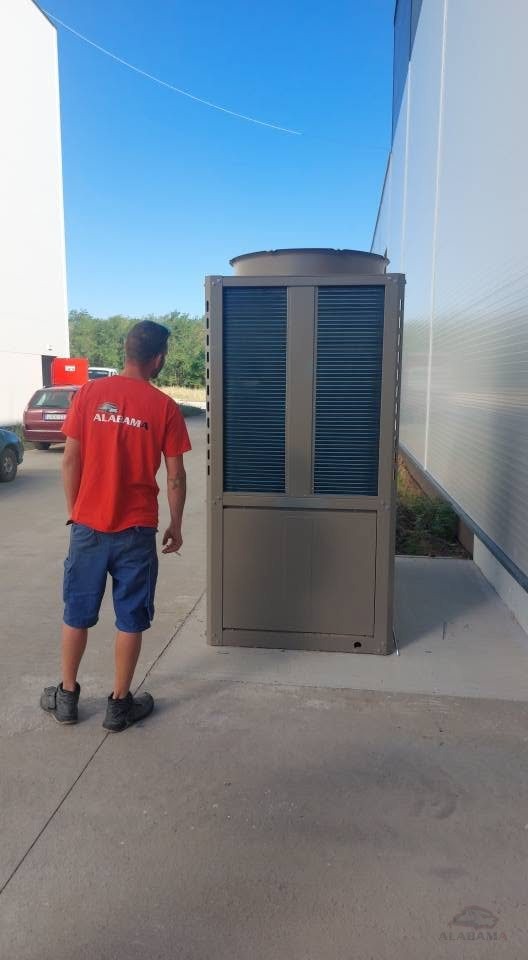
In an office, cooling is usually approached from people's comfort, the use of the rooms and the application of the rooms. In a production hall, the heat, the suction, the often opening gate and the temperature or humidity of the product may be added. The first question is therefore not 'what climate can fit', but what exactly needs to be cooled down.
The whole space, the working zone, the technology?
It is not the same task if workers have to have a decent heat level at their permanent workplace, if a substance or production process requires a given state or if the air of the whole hall is controlled. Technology cooling conducts the heat of a device or material; space cooling converts the indoor environment. They may be connected, but they don't replace each other. The solution shall be started for use and from actual load, not from a catalyst of an apparatus.
The heat of the machines and the schedule count together
In addition to the heat coming through the roof and walls, engines, production equipment, lighting and people are burdened with space. Some processes also produce pairs. It is important that machines work simultaneously, which zones they work in, and how many shifts they use. If you add up only the rated electric power, you can easily mislead the need for cooling. The good start is to assess the operating time schedule, actual heat output and summer peak load.
The suction cannot be triggered by a climate
If the work emits heat, dust or smoke, the suction at the source and the safe replacement of air shall be designed separately. Space cooling does not itself collect welding smoke or other technological emissions. The location and route of replacement of the intake air also affects cooling: it can cause poorly directed inlet drains and even affect the effects of local suction. The return of contaminated air should be decided only in the light of the process and the relevant safety requirements.
At high inheight, the injection site is decisive
In high places, warm air can gather near the roof, while people are down in the working zone. It is not enough to choose performance from the volume of the hall: you must see where the air enters and where the air leaves. If some permanent jobs are to be conditioned, local solutions may be considered. If the product or process provides for strict conditions throughout the whole space, another system shall be tested. The air-traffic trail shall also be located in addition to machinery, cranes, pipelines, fire protection systems and subsequent maintenance.
How do we choose a system?
In certain circumstances, ventilation or local cooling may be sufficient; otherwise machine cooling and dueling are required. The evaporative, direct expansion and cooling water solutions are for different loads, external conditions and operational needs. None of them can be responsibly declared performance or return without the hall data. The design is provided by a combination of cooling, ventilation and regulation, not a single device.
What is worth collecting for the first meeting?
- Baseline, height, working zones and gate opening order.
- Heat-producing machines, operating time and shift schedule.
- Existing suction, air supply and maintenance access.
- Employee comfort target and specific technological temperature or humidity requirement.
These can be used to create a real heat and air-conditioning plan and then to monitor the operation of the system. The cooling of the production hall is not a large-scale office climate: a combination of cooling, ventilation and regulation suitable for use.
Professional background: ASHRAE Handbook: Industrial Air Conditioning and Ventilation of the Industrial Environment. The article presents general decision-making criteria; it is not a technical data sheet for a specific Alabama project.
Related professional articles
 Industrial building services engineering
Why do you need air technology in an industrial hall?
 Industrial building services engineering
How do you calculate the necessary air exchange of a hall?
Related Alabama service: Industrial building services engineering
If the subject is now related to a real investment or construction decision and the practical issue is already more accurate (cooling in the same office), it is worth moving on to the industrial building services engineering site. There is also the main scope of the service, the related works and the contact of the service.