
Water quantity is only the first question
In addition to the quantity available, the quality and availability of water at greenhouse should be clarified. One source may be sufficient in one year of aggregation, while a different supply situation occurs during the peak growing season. The investor should therefore specify which production programme and which system he is looking for water. The use may include irrigation and other technological tasks. Their need is not worth treating as a single sum of equal certainty. In preparation, known measurements and assumptions still to be investigated may be arranged on a separate data sheet.
Source-usable technological water
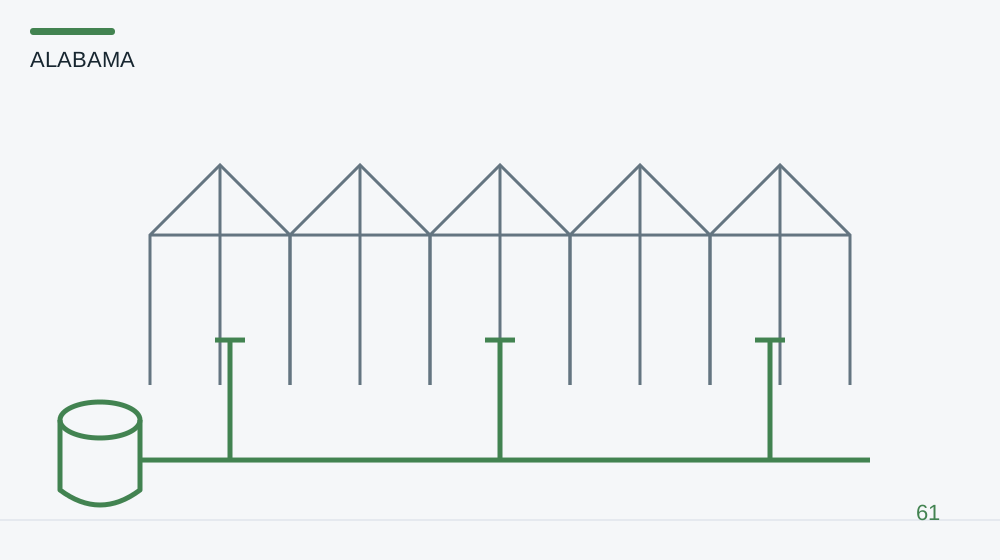
The arrival of water at the site does not automatically mean that it can be used directly for cultivation. The test will show the handling or storage tasks for the chosen use. M Dalsem The site showing water systems separates steps from collection to use. In your own project, you should draw a link between where the water comes from, where it's stored, what control comes next and which system gets it. If more resources are available, their different status should be treated. The name of a water source does not replace the data on its quality and usability.
The supply route is also part of the investment
In addition to the selection of the source, the point of accession, the route of transport and the location of the necessary equipment shall be examined. The water system trail at the site can meet other utilities, transport areas and later enlargements. The needs of greenhouse technology should therefore be reconciled with the possibilities of installation on site. Proof of the availability of the source, the design of the connection and the transfer of the internal irrigation system may have different responsibilities. The important thing for the customer is that there is no part of them that each participant assumes to take on the other.
Storage and reserve special task
The design of the storage can also serve to address the question of how time difference between supply and use can be managed. However, the necessary solution cannot be measured responsibly without knowledge of the production calendar and the actual source data. When switching between multiple sources of water, the new state should also be assessed on the water treatment side and on the production settings side. The reserve set does not necessarily perform the same quality function as the daily operating source. The operator should therefore be aware of the conditions under which water may be placed on the system and where this can be checked.
What should we ask in the comparative offer?
Tenders should be subject to a common use task, the limits of the source, pre-treatment, storage and distribution. The customer should also ask for a description of the missing data, not just a preliminary list of equipment. M FAO its guidance on cultivation provides an additional professional background for understanding the relationship between plant and water supply; yet the specific local solution is based on its own examination. The identification of the sources and routes and the feedback related to the treatment shall also be verified when activated. This will create a system of supply that the operator can then really follow.
Questions to reconcile the project
- What is the quality and availability data for each water source?
- What is the treatment and storage for which use it is intended?
- Who can justify the connection between the source and the internal irrigation system?
Professional background
The related international system solutions are provided by these primary manufacturers and execution sites. The decision aspects of the project shall be interpreted independently by the article; the specific size and content of the undertaking shall be clarified on the basis of the investment data.
development project preparation
The structure, engineering and on-site installation of the greenhouse is a coordinated working process. Learn the service area and compare the tasks of the planned investment.