Alabama Szer Kft.
Completed project
EcoFamily Mezőkövesd – complete building-services installation
Alabama Szer Kft. completed the building-services installation at the EcoFamily store in Mezőkövesd, including a VRV system and ventilation work, in March 2026.
- Year completed
- 2026
- Location
- Mezőkövesd
- Work completed
- Complete building-services installation
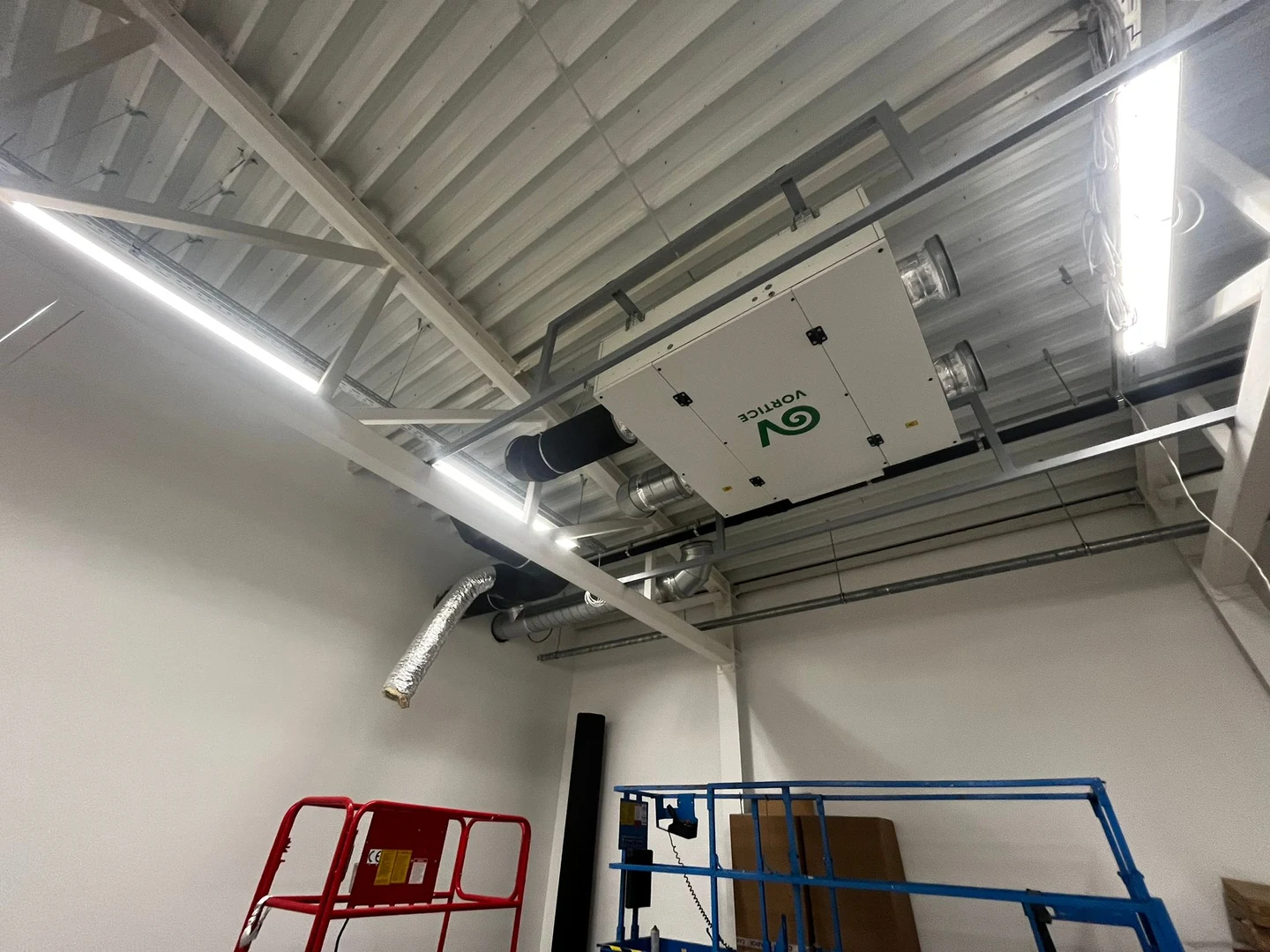
Alabama Szer Kft. carried out the complete building-services installation at the EcoFamily store in Mezőkövesd. The scope included a VRV system and ventilation work. A ceiling-mounted VORTICE air-handling unit, its ductwork and the air-conditioning system serve the same retail building.
Building-services installation at the Mezőkövesd store
Our work covered the on-site mechanical installations serving the EcoFamily store, including the VRV system and ventilation. The site work took place from 16 February to 6 March 2026 and was completed in March. Alabama’s contract covered these building-services installations.
The air-conditioning and ventilation systems have different tasks, but share the same building. Equipment, pipework and air ducts had to be installed together within the space available above the shop floor.
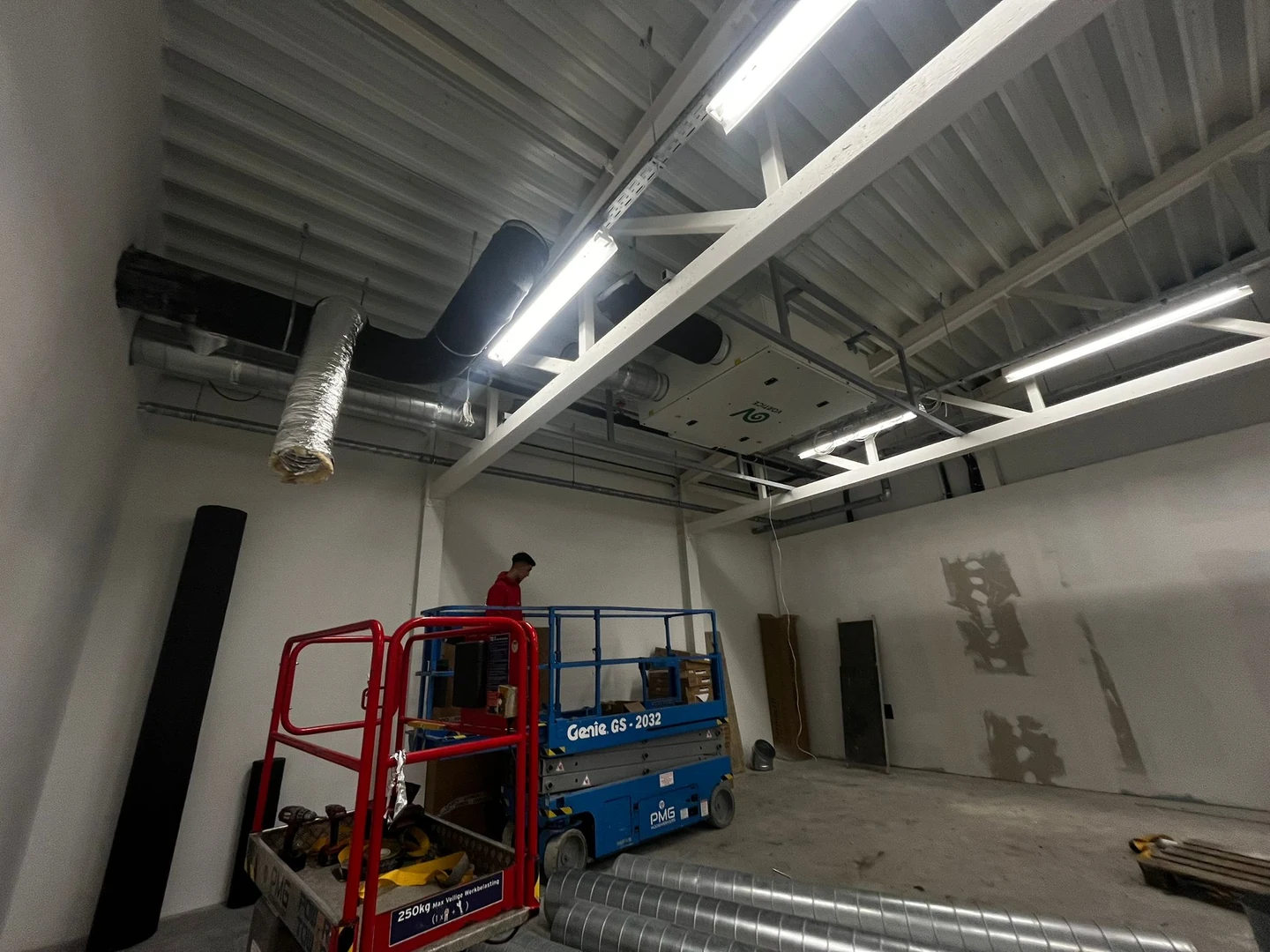
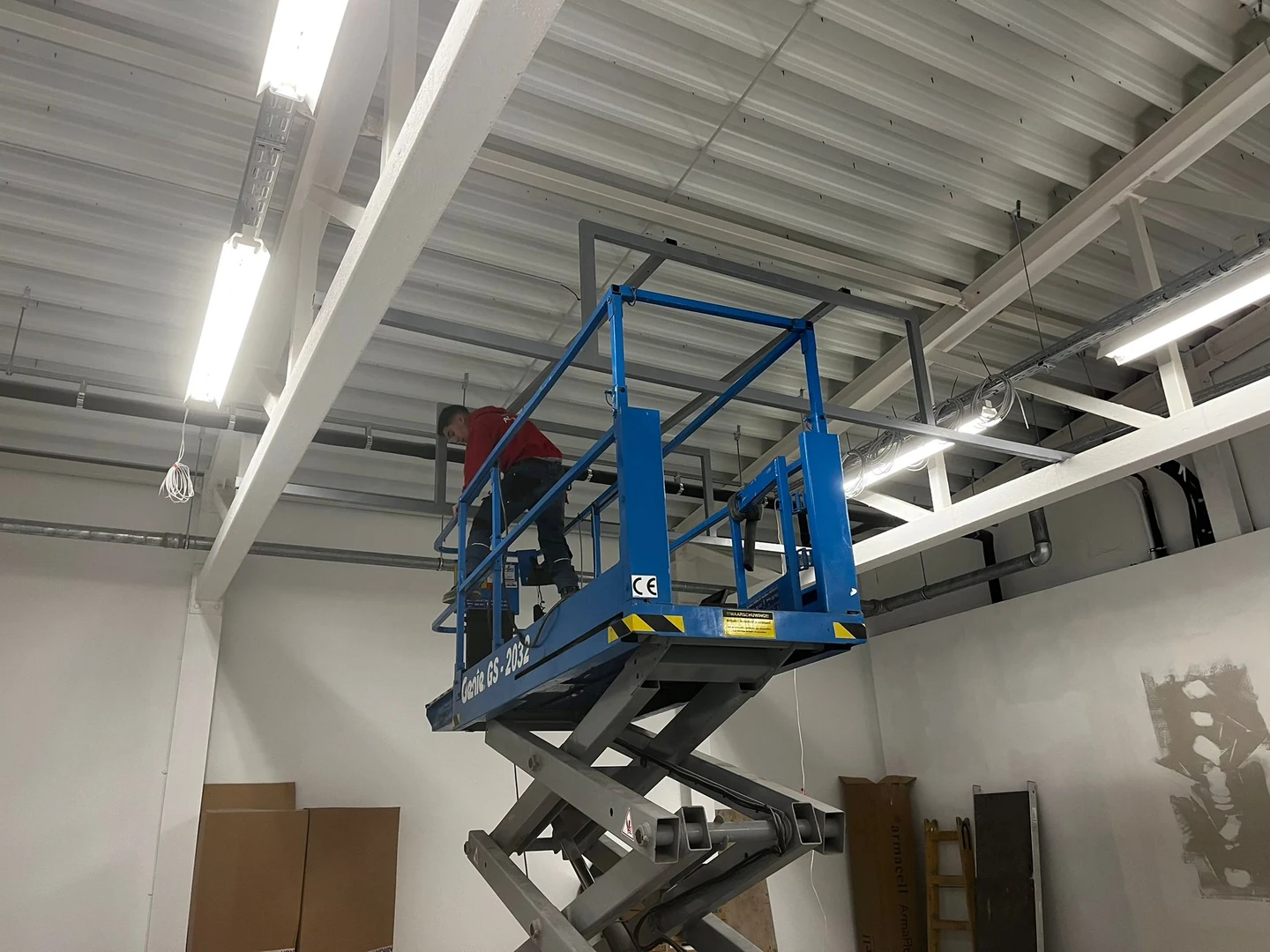
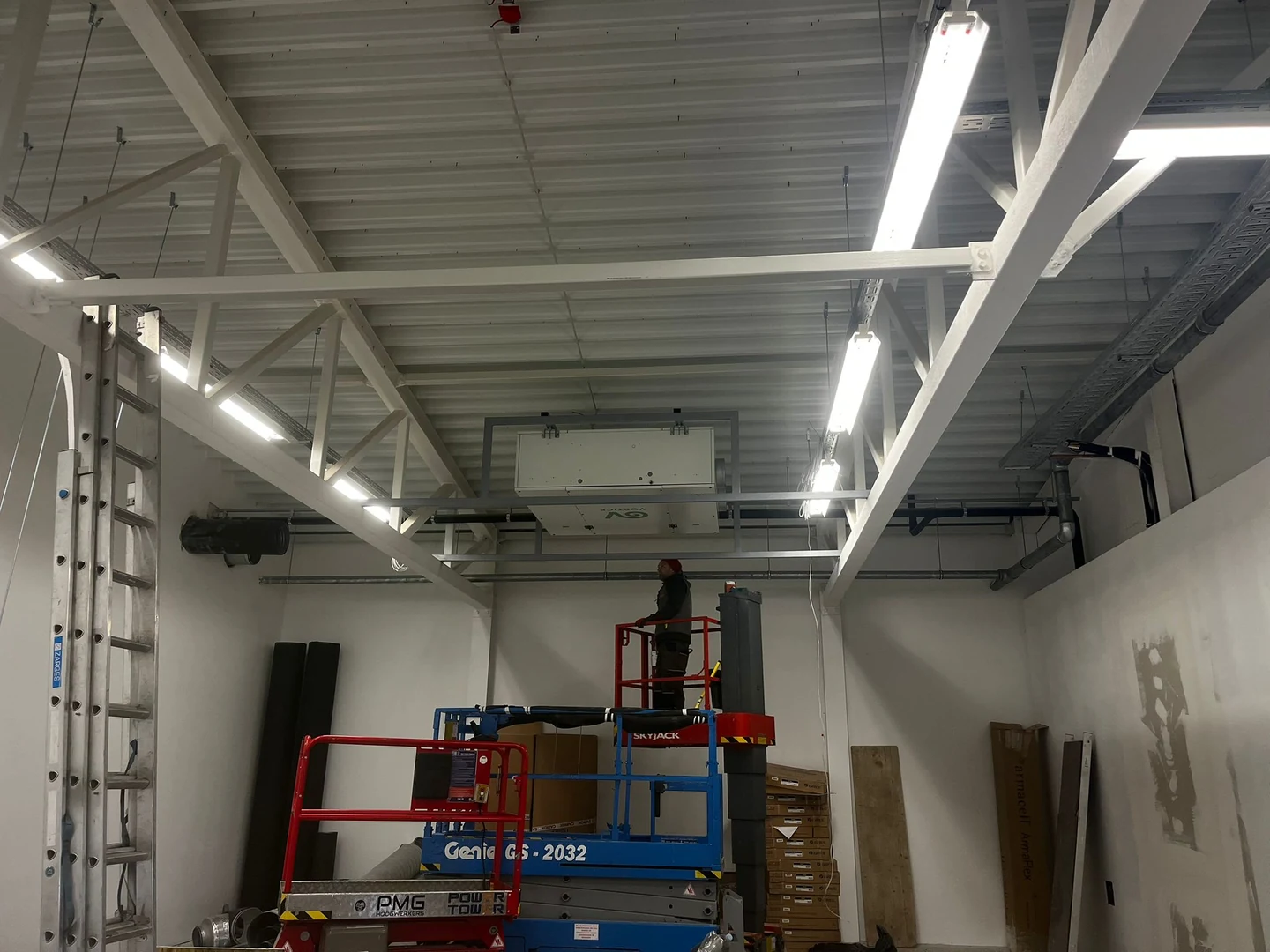
Our site photographs show the VORTICE air-handling unit below the white steel roof members, the ductwork and the scissor lifts used for installation. The high-level work points and open interior shaped the installation work.
Changing occupancy and heat loads
A retail space’s heating and cooling needs can change throughout the day. People, lighting, equipment, sunlight and an entrance opening to the outside all influence the indoor conditions. These are general factors in selecting and coordinating a system for a shop.
The load before opening can differ from the load when staff and customers are present. Changes in the weather also matter, so heating and cooling need to be considered alongside operating hours.
System capacity and control must suit those conditions. Nominal output alone does not describe how a system responds during use. The relationship between load, operating hours and control is therefore important when considering a shop’s heating and cooling.
How a VRV system serves different zones
The store’s installation included a VRV system. This type of system connects outdoor and indoor units through refrigerant pipework and varies refrigerant flow to meet demand. It can serve several indoor units; the actual arrangement depends on the selected equipment and the building design.
Different areas can have different heat loads because of their use, orientation or internal heat sources. Controls associated with the indoor units can help address these differences, subject to the particular system design.
Equipment, refrigerant pipework and controls work together to serve the occupied spaces. The role of the installation is to connect those elements as a coordinated system.
The operating controls also need to be understandable. Local settings and scheduling should match how the building is used and which functions the operator needs to access. The exact control arrangement depends on the equipment and design.
Ventilation and the VORTICE air-handling unit
Heating or cooling recirculated room air and supplying fresh air are different tasks. Air conditioning adjusts temperature; ventilation exchanges indoor air. A coordinated building-services installation addresses both functions.
At Mezőkövesd, the ventilation installation included ceiling-mounted equipment and ductwork. The project photographs show the suspended VORTICE air-handling unit and circular ducts sharing the overhead installation space with other services.
Recirculation returns room air to the occupied space after treatment. Ventilation introduces outside air and removes indoor air. These functions need to be considered separately and coordinated with one another.
Refrigerant pipework and condensate drainage
Refrigerant pipework transports heat between system components. Condensate drainage carries away water that forms during cooling. These networks have different requirements even when their routes are close together.
Condensate must leave the indoor unit through a suitable drain. Depending on the equipment and site arrangement, this may use gravity or a pump. Connections must follow the equipment requirements.
Insulation also matters around cold pipework and fittings. Continuity at joints and changes in direction helps manage condensation. Pipe routes and accessible connections need to be considered alongside the insulation.
Air distribution within the shop
Conditioned air has to reach the occupied area. Equipment position, supply direction and return-air paths affect distribution. Shelves, high fittings and circulation routes also shape the space after the store is fitted out.
Obstructions near an outlet can alter airflow. Supply and return positions should therefore be considered with the room layout, equipment instructions and intended distribution.
Direct draughts can also affect comfort. Air distribution connects the operation of the equipment with the area used by staff and customers.
Coordinating installations above the shop floor
Structural members, pipe routes and ducts share the ceiling space. Equipment positions, connection clearances and access for installation need to be coordinated so that one service does not prevent work on another.
At the Mezőkövesd store, installers used scissor lifts to reach the high-level work points. The available floor space and position of each overhead connection determined access during construction.
The installation sequence also depends on the progress of the building works. Coordinating pipework, equipment and closures allows tasks to proceed while their connection points remain accessible.
Installation checks and documentation
Checks are part of air-conditioning installation. The equipment manufacturer’s instructions set out the relevant procedures for connections, refrigerant pipework and units. Leak testing, for example, checks the integrity of the refrigerant circuit; the required method and conditions depend on the equipment.
Condensate-drain checks address a different issue: whether the water leaves through the intended route. Insulation and accessible connections also require inspection appropriate to the system.
Identification of components, operating information and equipment documentation support later use. They help the operator understand the installation and plan access for inspections and servicing.
Maintenance during daily operation
Maintenance commonly includes cleaning filters and other accessible parts and carrying out the checks specified for the equipment. The tasks and intervals depend on the unit, its use and the manufacturer’s instructions.
In a shop, maintenance access also needs to fit around trading hours and staff activity. High-level equipment may require working space and access equipment, so the final layout matters for servicing as well as installation.
Clear operating information, accessible documentation and an organised service contact help resolve questions during use. Installation establishes the starting condition on which operation and maintenance build.
Completed building services for EcoFamily
Alabama Szer Kft. completed the building-services installation at EcoFamily in Mezőkövesd, including the VRV system and ventilation work.
The project is part of our experience in coordinating mechanical installations in retail buildings. The photographs document the on-site installation within the building’s actual structure and available space.
Building-services installation in Mezőkövesd
Read more about our building-services installations for commercial and industrial premises.