Alabama Szer Kft.
Project implemented
Nemeskert - greenhouse heating and pump house construction in Forráskút
The Nemeskert in Forráskút The project has been implemented in full mechanical implementation of the internal greenhouse heating and transport pump house Alabama Szer Kft.
- Year completed
- 2024
- Site
- Forráskút
- Work completed
- Greenhouse construction
As part of our cooperation with Nemeskert since 2004, Alabama Szer Kft. completed the full mechanical installation of the greenhouse’s internal heating and transport pump plant room in phase 6 of the Forráskút investment. We worked from the supplied drawings. The work connected underground pre-insulated mains, pump-and-pipe assemblies, mixing groups and the different heating networks serving the growing areas.
Transmission of heat to different parts of the production area
In the heat of a greenhouse, heat must reach the place of cultivation. Pipes from central mechanical units, distribution networks and pipes running in the vicinity of the plant stock shall carry out this task together. M Nemeskert in Forráskút the implementation of this system of relations was part of our work in its investment.
The internal heating includes several pipework systems. The lower rail heating, the vegetation heating and the PE-The soil heating is connected in different locations and different ways to the production areas. It is the responsibility of pumps and mixing groups to transfer the heating water to these circles. The construction work therefore spread from mechanical connections to long internal lines.
During the construction, the large spine lines and repetitive internal heating loops were part of the same system. The construction had to be carried out at the same time with the larger fittings and many similar fittings in the growing space.
Our own task and cooperation
The Alabama Szer Kft. the internal greenhouse heating and the transport pump house have fully undertaken its mechanical work. The construction is based on the plans made available to us. The practical task was to assemble, install and connect the planned pipework systems and mechanical units.
Continuing consultation was needed with experts carrying the engineering system. Drawings, incoming materials, pump units and on-site mounting facilities have defined the work in line. The fittings which can be prepared at the workshop and the piping sections to be assembled on the site had to be organised separately.
The project's role as contractor was to complete the entire mechanical task undertaken. This included connections between the pump house and the internal heating as well as the distribution lines and heating circuits of the Greenhouse departments.
Four sections, multiple interconnected heating circuits
The Nemeskert Greenhouse heating system is connected to four greenhouse divisions. In the departments separate rail heating, vegetation and PE-a tube heating network appears. The distribution and mixing groups are also in line with these, so the system can be built from large spinal lines to the inner pipeport systems.
The role of the separate circles in the growing space makes sense. The lower steel pipes run in the space between the lines, the vegetative pipes are located near the plants, PE-and a piping network for the soil heating task. Due to the different locations, the piping, distribution lines and connections had to be designed for the network.
There are many repetitive elements in the assembly, but the location of the details is specified. The forward and returning wire, the heating nozzle, the connection and the lock are only suitable for the proper connection.
Pre-insulated vertebral lines underground
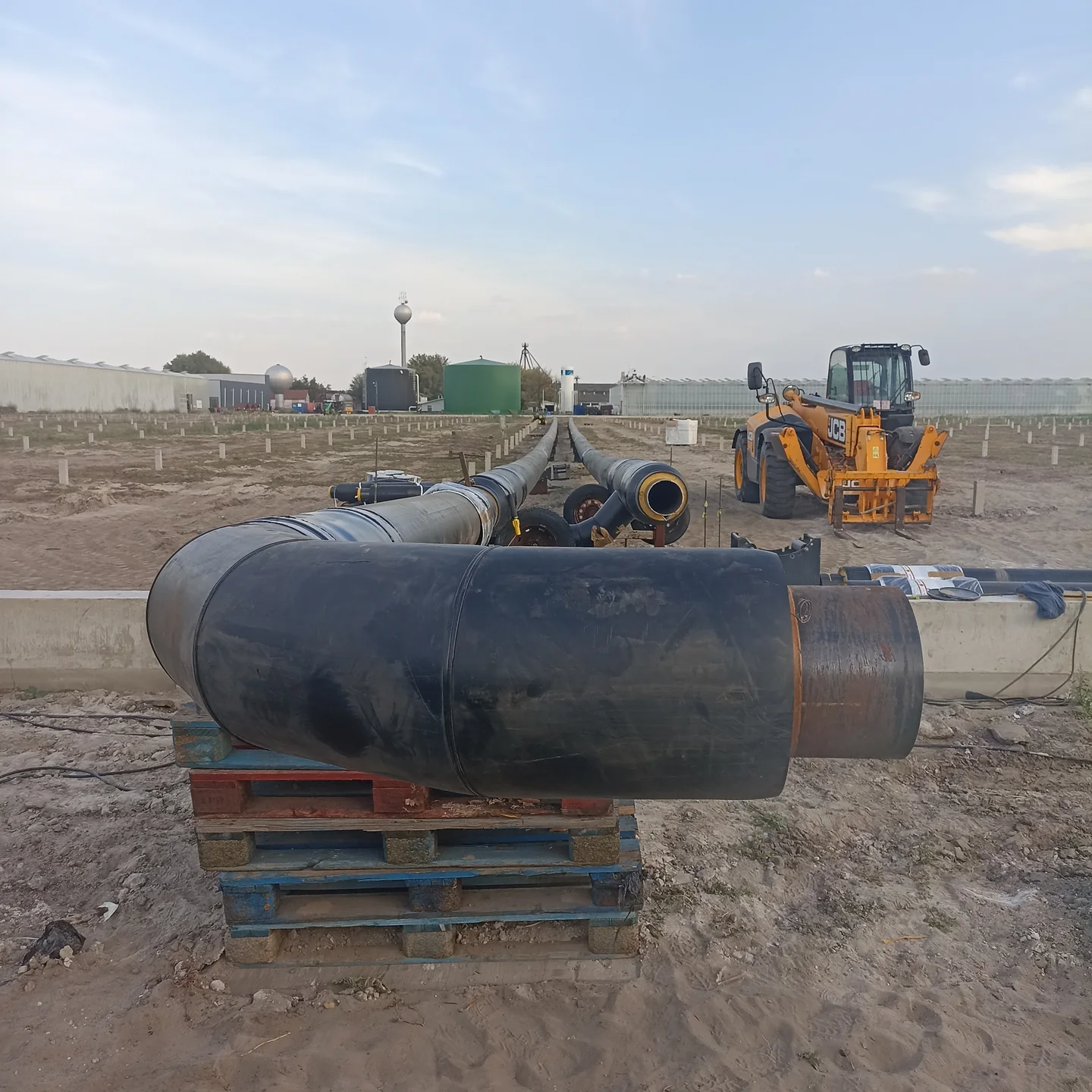
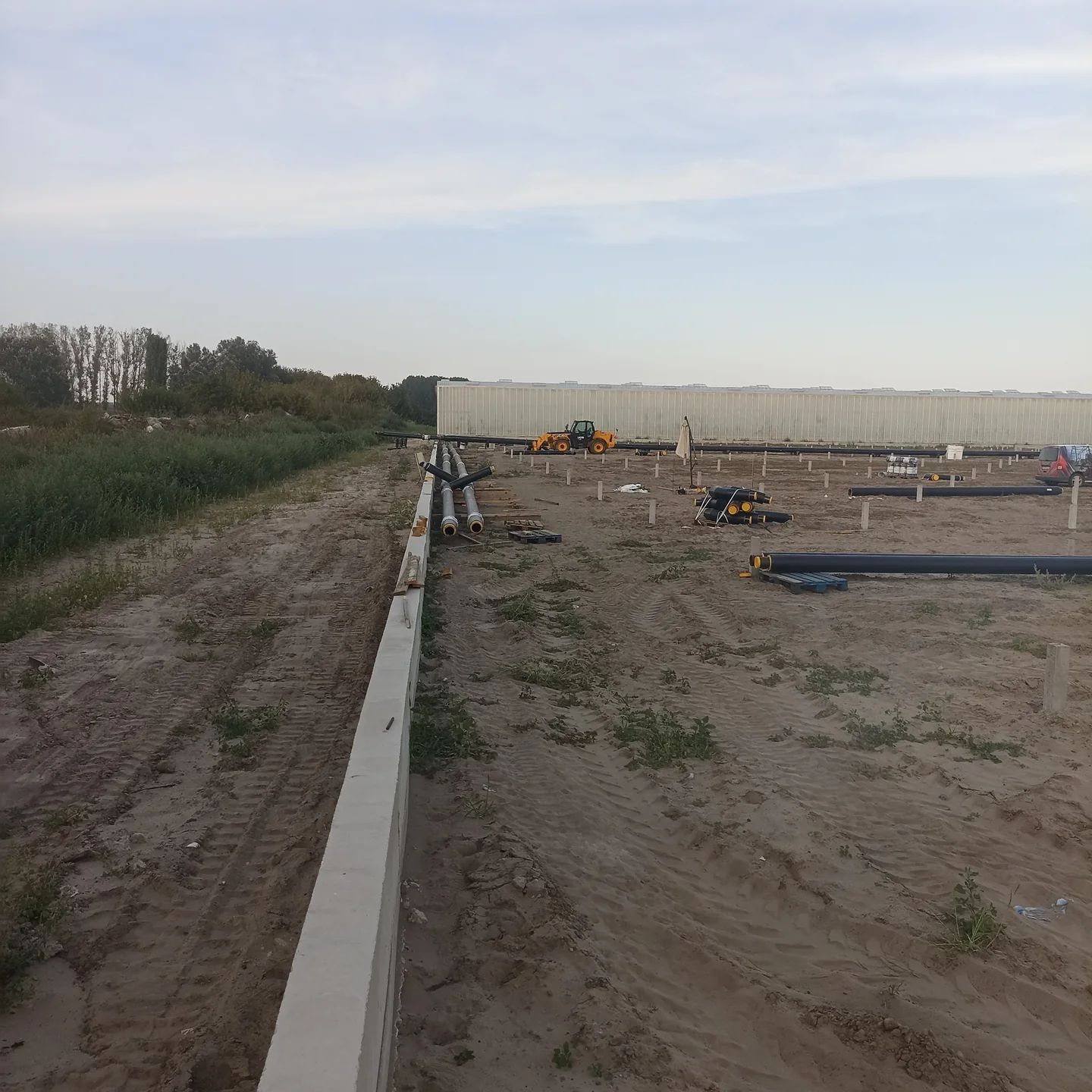
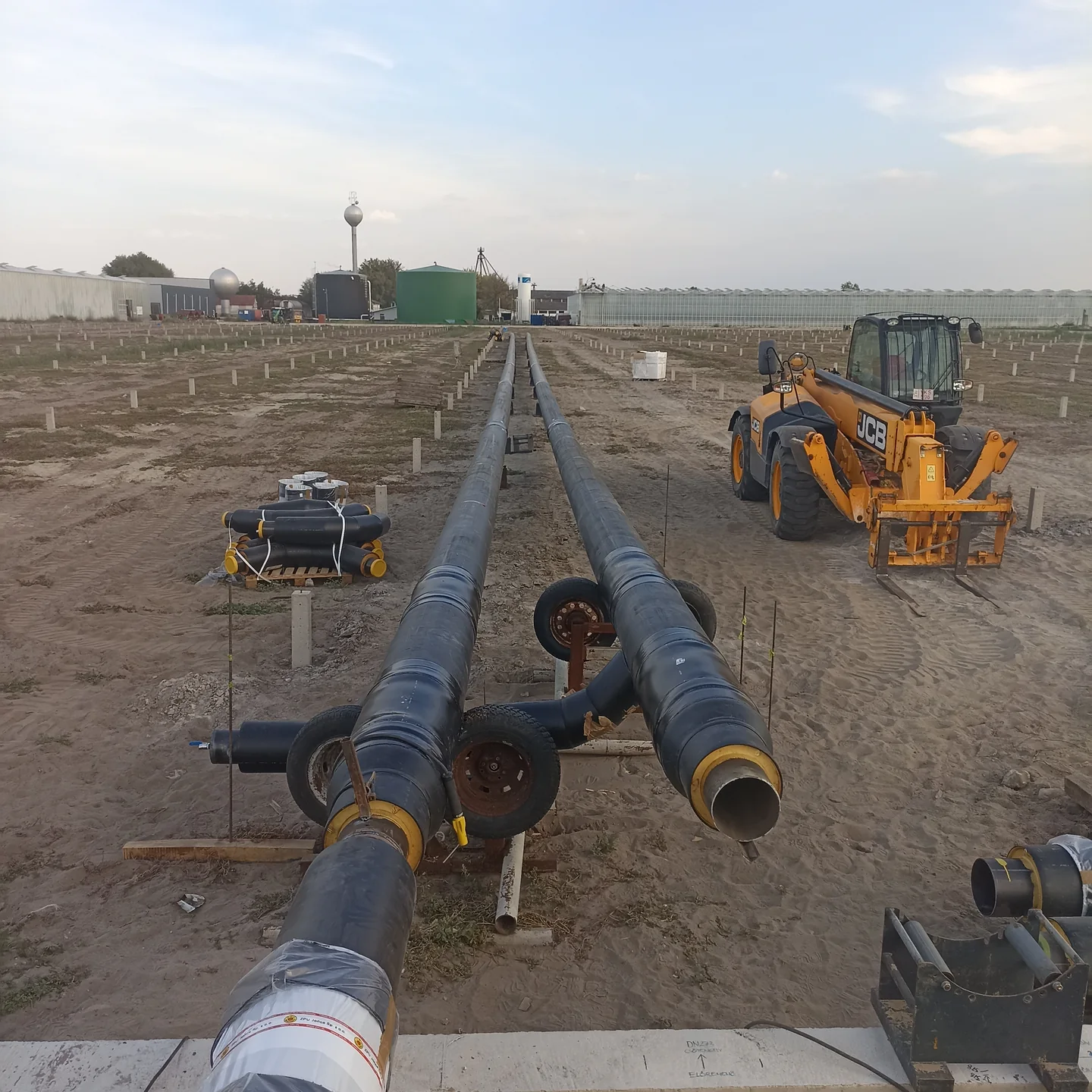
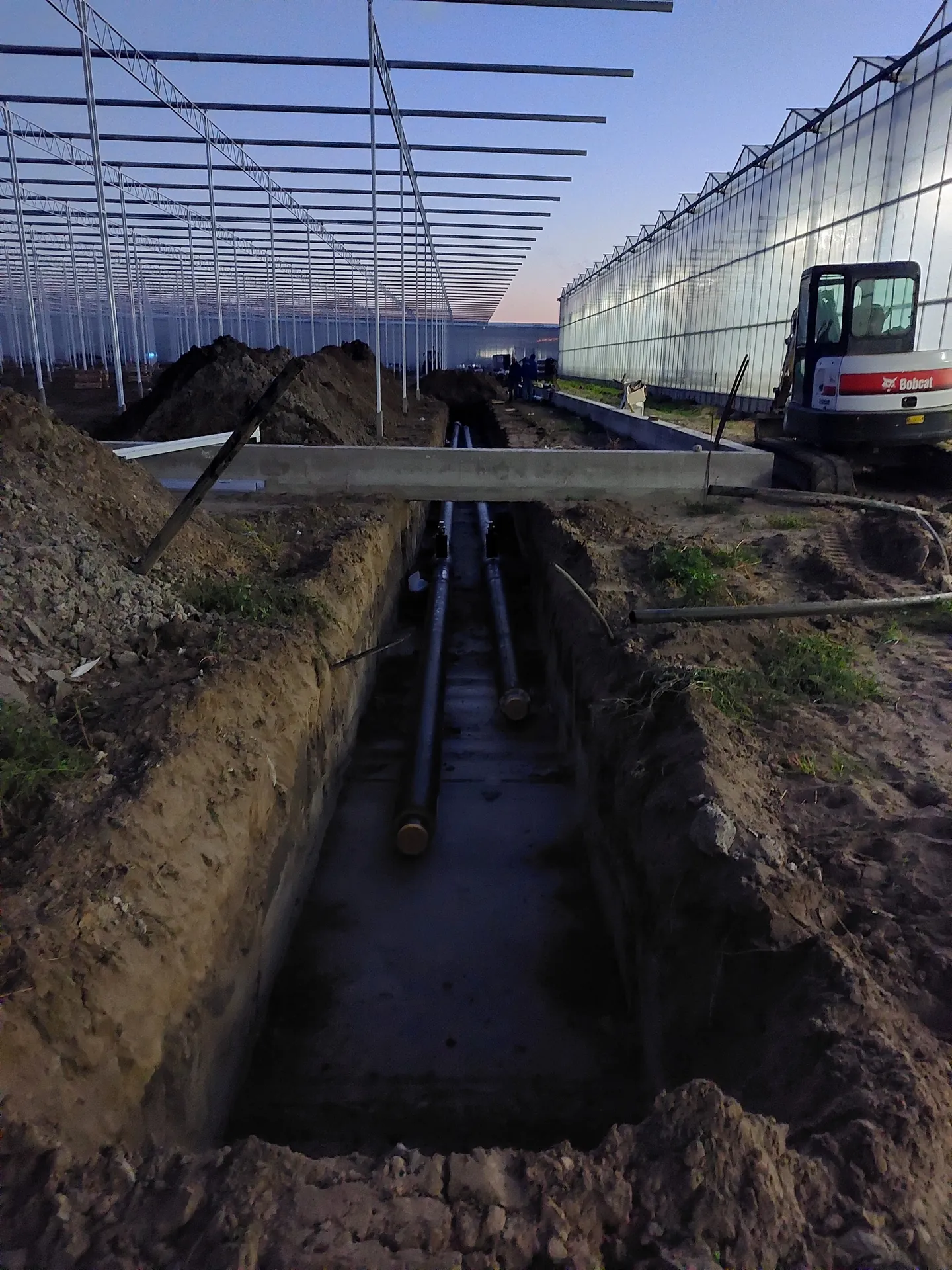
For the heat transport, the project was equipped with underground, pre-insulated wires and associated take-off sections. In their own work phase photos, you can also see the receipt of the tube material, the sections of the pipe prepared for assembly and the wiring in the workroom. These images show the construction environment of the external network related to internal heating.
In the pre-insulated tube, the internal tube leading to the heating water is surrounded by thermal insulation and outer protective clothing. On-site assembly therefore also affects the environment of connections, in addition to internal tube joints. The design of the trail, the change of direction and take-offs means a building-in task, especially at the points where the wire reaches the Greenhouse section or the engineering unit.
The location of the sections running in the trench and surface connections had to be adapted to the surrounding construction work. The route of the spinal cord was determined by the mechanical design and on-site interfaces. The open ditches shown in the pictures illustrate this stage of construction.

Pumps and transport pump housing
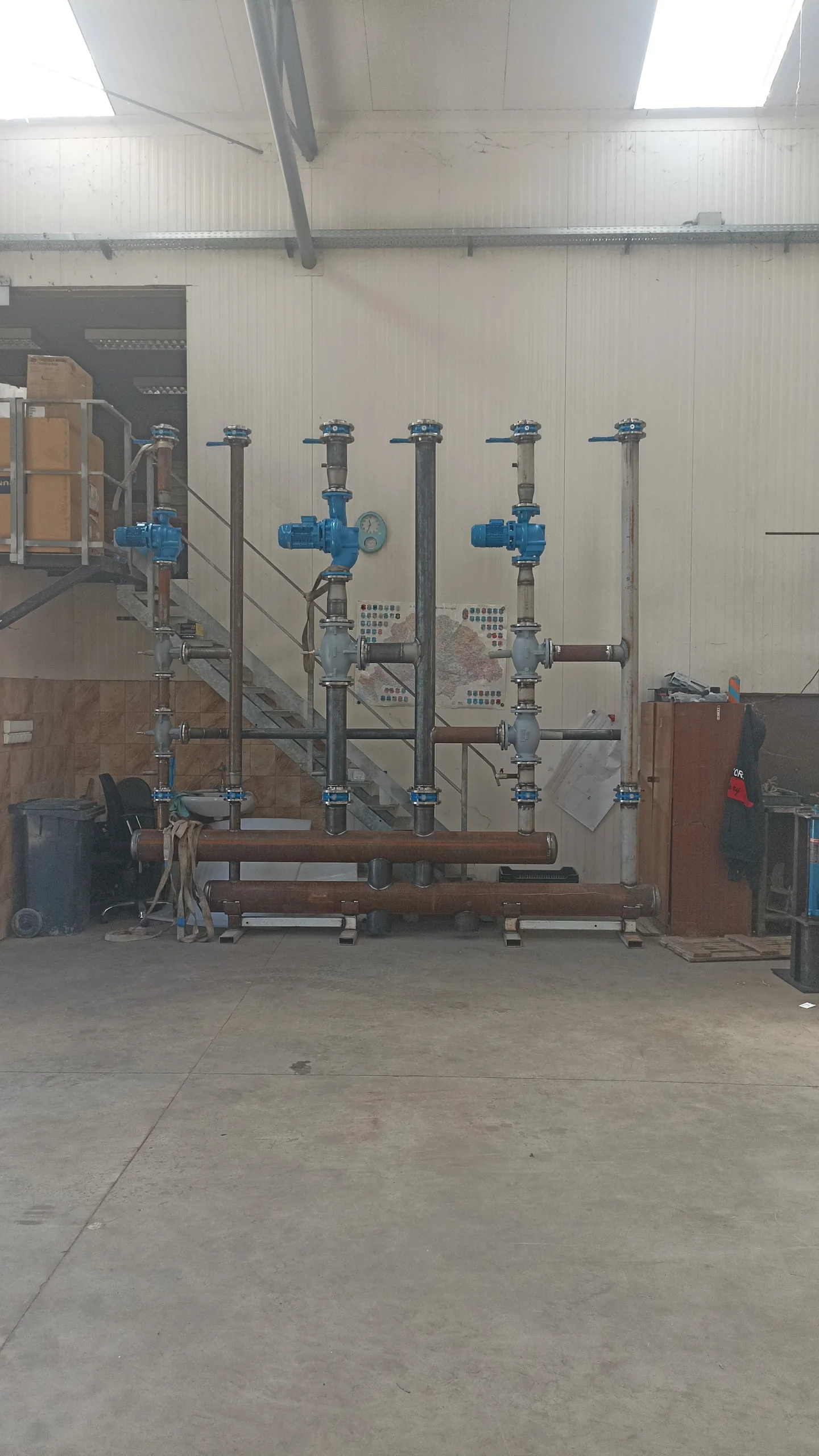
The transport pump work included mechanical installation related to the transmission of the heating water. The pump units were accompanied by pipes, thermal connections, dampers and support elements. They had to be assembled together with the connections to the external spine lines and the internal network.
The pump is used to circulate water, and the pipes around it give the system connections and treatment points. Therefore, the installation of the pump and connection of the pipes are part of a single installation task. The location of the support consoles, the flange joints and fittings shall be adapted to the whole tube unit.
One of the workshops shows a prepared pump pipe unit. Such preparation allows the assembly of the connecting elements in one place and then, adapted to the on-site connections, to continue assembly. The workshop is thus directly linked to the pump house.
Mixing groups for heating sections
The various networks of internal heating were connected by separate mixing groups. M Nemeskert In the heating system of the rail heating, vegetation and PE-tube heating circuits fit the distribution network through such units. The units are equipped with circulating pumps, mixing valves, dampers and pipe connections.
The task of the mixing group is generally linked to the management of the water supply and temperature conditions of the heating circuit. The various heating tasks thus connect to the larger system through their own mechanical units. Exhaust, filling and discharge points are also part of this design.
The installation also required the adjustment of the pipe conversions, the connection of the pumps and the location of the valves to the unit. Due to several parallel circles, transparent arrangement and correct connection were an important part of the execution.
Lower pipework systems and rail heating
The steel pipes of rail heating are located in the lower space between the production lines. These pipes may also be involved in the transport of barbed work cars, in addition to heating. M Nemeskert The construction of its rail heating network consisted of distribution lines, long heating loops and associated connections.
At the ends of the loops, reversing elements and connections connect the sections. The location of the pipes is determined by the layout of the supports and rows. The appropriate line management is therefore also related to the work done in the growing space: heating pipes must be placed together with the transport and working places.
On-site assembly required welding and pipe assembly work. The steel tubes were introduced, placed in the prepared containers and fitted in order for other greenhouses to work. For repetitive loops, consistent design is of particular importance.
The connections of heating sections along the side walls were also related to the internal network. Their distribution and return lines are consistent with the different extreme design of the departments. For end-of-line joints, straight heating pipes, reverses and heating of the boundaries are therefore displayed together. The nodes are equipped with locks, fasteners and anti-air points. This part of the construction had to be developed together with the internal transport connections of Greenhouse and the piping site. So long pipe sections and end-of-line relationships form one internal network.
Vegetation heating near the plant stock
In addition to the lower network, the heating plant creates a separate steel tube system. The pipes are located closer to the plant stock and are connected to the heating circuit through their own distribution line and connections. This section of the investment was part of the complete installation of the inner greenhouse heating.
The location of the vegetation pipes shall be adapted to the production arrangements. Their holding, the loop turns and the connection points are therefore different from the lower rail heating solutions. The purpose of the separate circle is to allow heat output to be connected to the growing space at different heights and in other places.
The joint management of the distribution network and of the many repetitive sections of the pipeline was important in the implementation. The preparation of the pipes, the location and the construction of the connections meant a coherent assembly work that was carried out with the rest of the heating networks in the department.
PE-a tube soil heating network
For steel tube systems PE-The pipes were connected to the ground heating. The flexible pipes connect to the heating by separate distribution and return lines. The installation of the system was determined by the design of the production spaces and the technical arrangement provided.
Installation of the soil-heating network was a separate phase from welding the steel pipes. Laying, routing and connecting the long PE pipe sections had to be coordinated with the other work in the greenhouse sections. The pipe routes also had to fit the planned internal layout.
In the event of a connection between networks of different materials, the connections are between transitions and connectors. M PE-heating thus appears as its own installation task, while the pump and mixing group units are part of the same internal heat supply system.
Pipes, suspensions and linings
For internal heating networks, the pipes and support assemblies shall form the final arrangement together. The suspension of spine and distribution lines, the support of heating pipes, the end-of-line rounds and the hose connections in different locations are different tasks.
The position of the containers affects the line of the pipes and the working space that remains next to them. The pipework systems and the distribution line meet; this is where the locking and connecting elements are placed. The compilation of the network therefore consists of the consistent placement of many small details.
The Nemeskert In its mechanical execution, this detailed work was linked to the larger pipe assembly units. The underground spinal cord, the take-off, the mixing group and the internal heating loop eventually form a mechanical system linked to these points of connection.
Workshop preparation and on-site assembly order
The project's own footage shows several phases of construction being built together. You can see the receipt of pipe materials, the preparation of the pump unit at the site, the assembly of the pre-insulated sections and the location of the pipes. These are different working environments, among which the installation tasks had to be organised.
For internal work, PE-network laying, steel tubes input and welding required a related schedule. The availability of the installation area and the progress of the other greenhouse work have determined which tasks could follow. The coordination of the tasks of materials, machinery and the assembly was therefore a daily part of the construction.
During the construction of pipework systems, the following elements had to be connected to the sections already placed. The workshops in the workshop and on-site thus led to the assembly of internal heating and pump house engineering.
The finished piece of mechanical work
The Nemeskert in Forráskút has been completed in its investment Alabama The internal greenhouse heating and the mechanical construction of the transport pump house are undertaken by the undertaking. The workpiece has spread from external pre-insulated sections to engine units and mixing groups to separate heating networks in production spaces.
The usage value of greenhouse heating is provided together by the related elements. The spinal cord carries heat, the pumps circulate, the mixing groups are connected to the separate circles, and the internal pipewater systems produce heat at the site of cultivation. The implementation task was the full implementation of this relationship system.
The following are project photos of Nemeskert greenhouse investment is presented in pipework systems and workshops: material arrivals, prepared units and details of on-site guidance.
The Nemeskert construction of heating and pumping housing of greenhouse