Alabama Szer Kft.
Project implemented
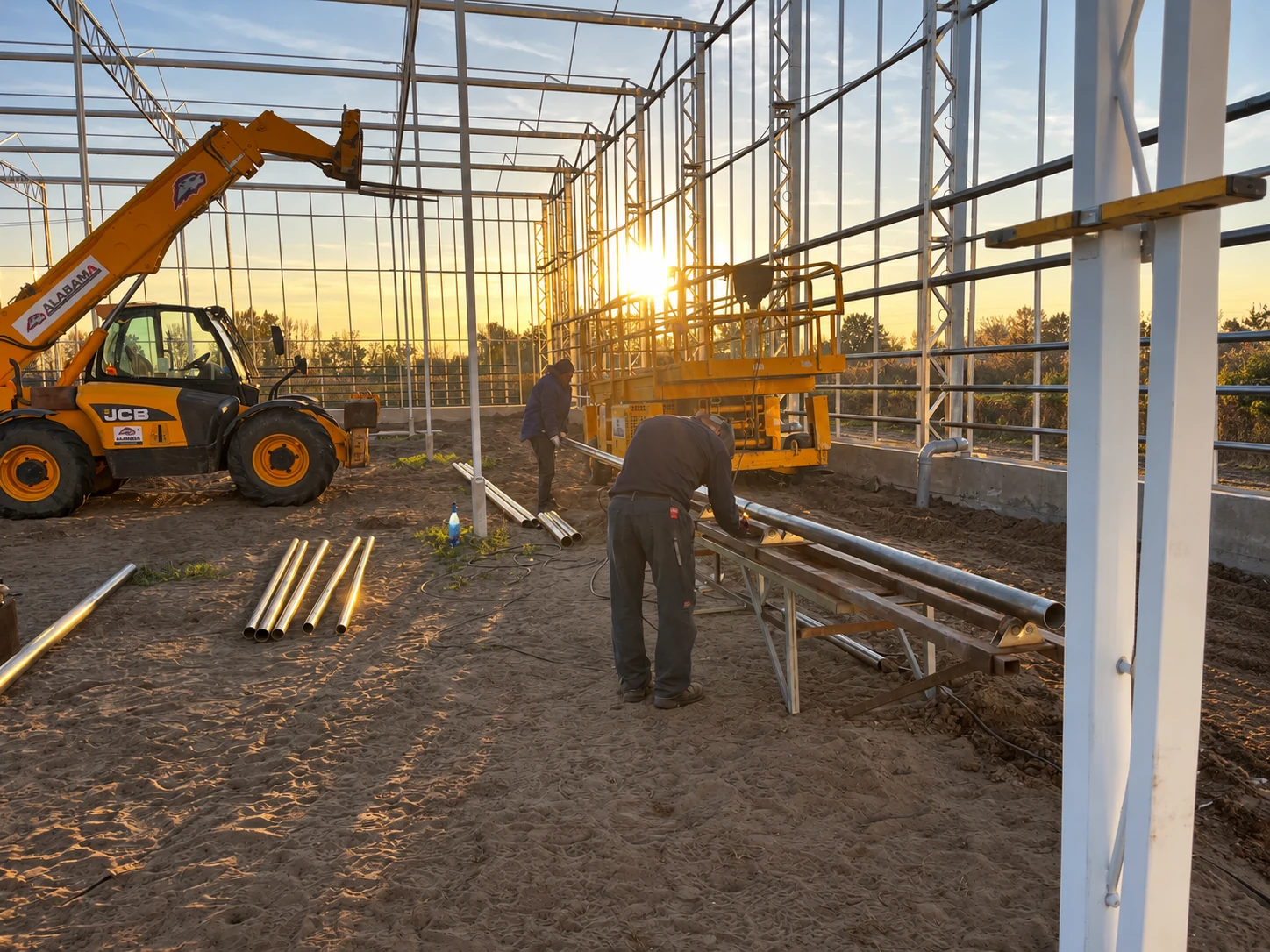
Nemeskert - Engineering of 16400 m ² greenhouse expansion in Forráskút
The Nemeskert in Forráskút In addition, we have completed a full mechanical installation of 16 400 m ² growing area.
- Year completed
- 2025
- Site
- Forráskút
- Work completed
- Greenhouse mechanical installation
As part of our cooperation with Nemeskert since 2004, Alabama Szer Kft. completed the full mechanical installation for 16 400 m² of growing area in the phase 6 expansion of the Forráskút greenhouse. The work connected the new growing sections’ heating systems to the site’s existing heat supply. Installation covered the heat-distribution pipes, mixing units and the greenhouse’s various heating circuits.
Mechanical background for new production areas
The heating of a garden greenhouse consists of several interrelated tasks. The heat shall be transferred to the production area and distributed in different areas and circles in each department. M Nemeskert in Forráskút In the expansion of greenhouse, this mechanical connection was the central task of construction: the heating of new greenhouse areas had to be adapted to the existing system.
The investment of 16400 m ² was linked to two new production areas. These are the 5.and appeared as Section 6. The design took into account the connections and mechanical connections of the existing pace pipework systems and linked the internal heating of the new areas to them.
The task of greenhouse engineering is to adjust the heat supply to the use of the growing space. This requires a combination of spinal lines, pump and mixing units, distributors and heating pipes for the lines. The construction has combined the assembly and connection of these elements.
The Alabama engaged working part
The Alabama Szer Kft. The Nemeskert in Forráskút He has completed the full engineering assembly of his greenhouse expansion. The work was carried out in line with the agreed technical plans, taking into account the relationship between existing and new components.
The mechanical assembly was reported simultaneously by larger pipework systems and detailed site assembly tasks. The pre-insulated transport lines, mixing groups, heating networks and connections were linked to different work areas. They were linked by the operational order of the common system.
In the rediscussion of the workplaces, the installation sites, the pipe trail, the connections of the support structures and the interior arrangement of the greenhouse had to be taken into account. The individual tasks appeared as part of the building of heat and internal heating.
Connecting to existing heat supply
The Nemeskert in Forráskút The mechanical design of the expansion of the greenhouse was linked to the previously completed heating system of the site. In order to provide new departments, the connections between existing dealers, transport lines and pump units had to be managed. The new network was therefore built as a continuation of the already available mechanical infrastructure.
This relationship affects both the forward and the returning branches. The hot water reaches the sections on the transport lines and the water coming back from the heating circuits is part of the same hydraulic system. The two directions together give the connection necessary for continuous circulation.
The points of accession must also be consistent with the new departments' location and the arrangement of the mechanical units. Therefore, the continuation of existing lines and the achievement of internal heating groups were linked to the installation.
The supply is organised around two main branches: one serves sections 1, 3 and 5, and the other serves sections 2, 4 and 6. The new sections therefore share the heat-distribution system with the earlier growing areas. This arrangement also clarifies the purpose of the pipework: the distribution branch connects several sections, while the local mixing group connects the different heating circuits within each section.
Preinsulated wires for heat transport
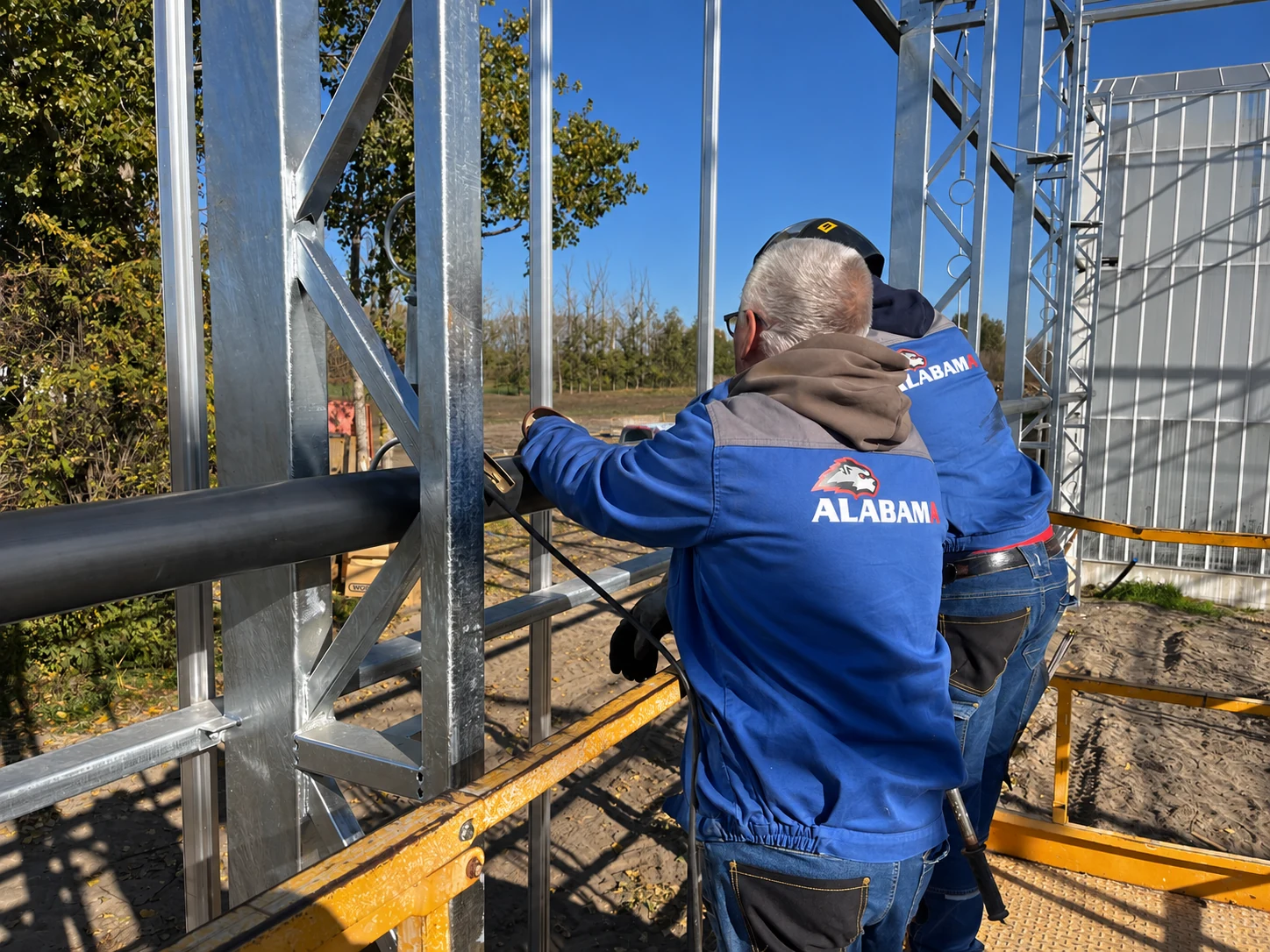
The new greenhouse units were connected to underground, preinsulated heat supply lines. These are the role of transferring heat to internal heating groups. The line consists of the forward and returning branches, and the trail links the continuation of the existing system with the new supply points.
The pre-insulated tube consists of several parts: the steel tube, which carries the heating water, is running inside, surrounded by a heat insulation layer and an outer protective cover. In the case of on-site installation, both pipe bonding and insulation closure are relevant. Where tube sections are assembled, the continuity of the entire stratum of the line shall also be observed.
The emerging ends of the pipework systems greenhouse are linked to the mixing groups. At these points, the underground transport network meets the machinery installed in the rooms. The arrangement of the track, the positions and the connectors therefore directly affected the interior installation work.
The outer shell of the tube separates insulation from the surrounding ground, while the inner steel tube provides the way of the heating water. The same structure shall continue in the course changes and assembly points. Therefore, the construction task does not end by connecting the two steel tubes: the construction of the construction of the tube-binding environment and the connection of insulation are also part of the assembly of the wire. This shall be handled by the on-site connection of each section and section.
Services by the competent authority
In transporting the heating water, the pump units ensure the necessary circulation. M Nemeskert in Forráskút In developing its expansion, the activation of new departments was also linked to the existing transport pump system. The supply branches and their related fittings continued to transport heat towards new areas.
The larger transport circuits of the system and the heating circuits of each section are different. The transport side will put the heat in the right place and the groups developed in the departments will be connected to the heating system. These levels had to be aligned during fitting.
It is important to have locks and connections for subsequent access. In a complex greenhouse system, different branches must be recognizable for the departments they have. The mechanical composition followed this fragmented layout.
Mixing groups for different heating circuits
In both new sections separate rail heating, vegetation and PE-a hose heating circuit connected to the heat supply. Each system has its own mixing and circulation units. These clamp the piping, pump, clamp and mixing valves of the circle.
The task of the mixing group is to create an appropriate flow of water and a adjustable temperature connection for the heating circuit connected to it. This includes valves, circulators and reentry branches. The layout of the elements within the group had to be adapted to the needs of the different heating systems.
In the design, the connection of the three systems will also appear. The cascade connection allows the circles to connect to the returning side of the previous system. This is a hydraulic system structure, the assembly points of which are connected between pipes, mixing valves and groups. The Alabama its work also covered the implementation of these mechanical relations.
Thermometers in groups help to read the state of the heating water. The depressurization points are used to remove the collected air, charging and emptying connections are part of the water-side management of the system. These are smaller elements compared to pumps and long wires, but they are part of the mechanical composition. Their location shall be assigned to the piping connections in such a way that they belong to that circle and may be accessed for subsequent treatment tasks.
Sine heating between production lines
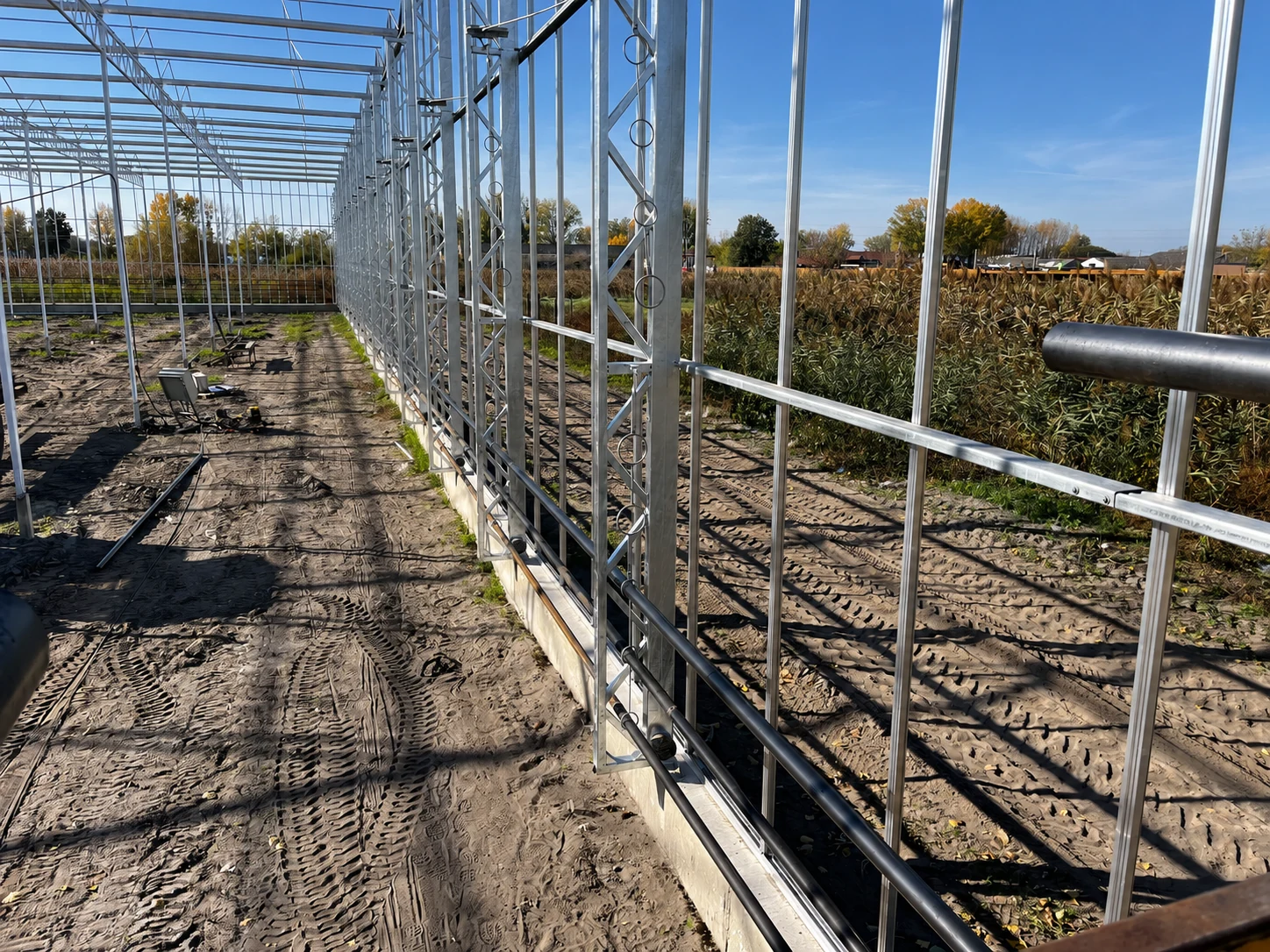
The rail heating is a steel tube heating network located in the lower part of the greenhouse. M Nemeskert In the interior design of a new greenhouse, this appears as a separate heating circuit with its own distributors and mixing group. The piping between the lines and the end-of-line connections together form the network.
Greenhouse spindle sheets can also be connected to gardening work and therefore the position and support of pipes are also relevant for use. In addition to the heating function, they must also match the interior layout and transport system of the greenhouse.
The long pipe sections, end-of-line turns and connections to the distribution were to be treated as a single system. The support and connections shall form part of the network's operational and on-site arrangements.
The rail heating distribution lines link the longitudinal ducts to the mixing group. The round at the end of the line leads the water back to the other side of the noose and the connection to the distribution network. Thus, the repetitive pairs of pipes in the large base area do not function as separate heating bodies but as part of a common circle. In addition to the many similar details, the links between distributors and loops are therefore important.
Vegetation heating near the plant stock
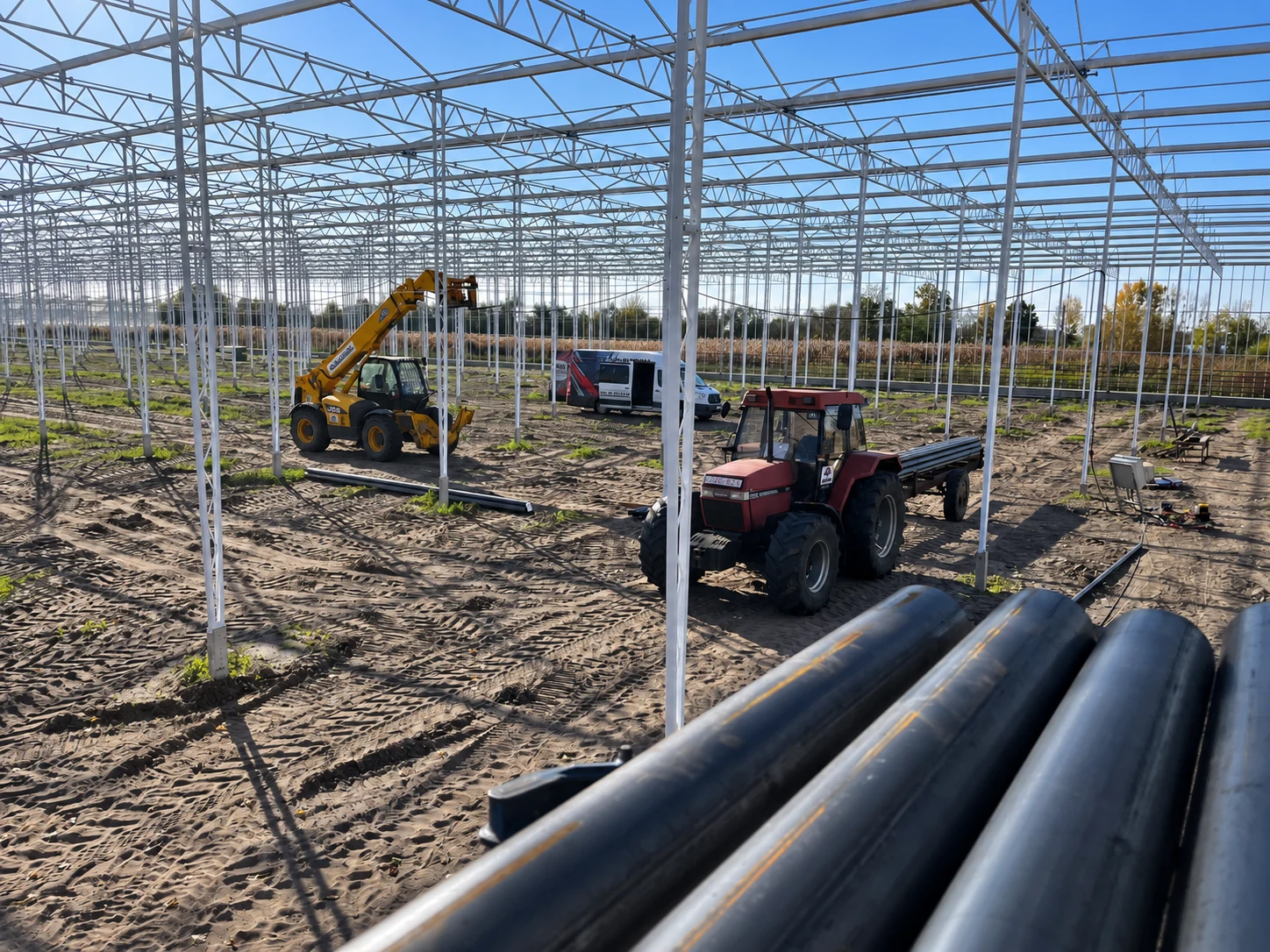
The vegetation heating is connected to the other high and user zones of Greenhouse than the lower rail heating. The arrangement of the pipes is adapted to the production system. M Nemeskert This network has also received a separate distribution and blending group in its new production areas.
The heating pipes pass the heat to their environment while circulating water. Their location therefore affects which part of the growing space the heat is displayed in. The separate vegetative circle allows mechanical heat supply close to the plant stock to function in a coordinated manner with other heating tasks of the greenhouse.
In addition to the connection between piping lines, returning sections and distributors, suspension was also relevant in the site design. These mounting points shall determine the location of the network together with the cultivation arrangement.
PE-hose heating and end-of-line connections
Third heating system PE-a hose design. Pipework systems are also connected to their own distribution and mixing units. The location is adapted to the lower part of the production system, the route and connections of the hoses were treated with the internal design.
The connections between rigid steel tube and hose heating require different mounting solutions. The hoses are connected to the distribution lines with suitable fittings, and the rings are fitted with locks and charging and unloading connections. The end-of-line arrangement shall also be adapted to traffic and production lines.
The three heating systems together provide the structure of the mechanical heat supply of the new departments. Circles perform their tasks in different locations, while they relate to the same transport network and groups developed per division.
Tractors, pipes and access points
In a large greenhouse heating network, pipe supports and suspensions are part of the wiring arrangement. The wires shall run in a specific location relative to the greenhouse structure, the cultivation system and the adjacent mechanical elements. The supports and supports are designed to accommodate this location.
The installation tasks are also related to the assembly of pipe sections, end-of-line contacts and the connection to groups. The location of the mechanical elements had to be treated in the context of the entire network. The end of a line connected to a distributor or a line of heating means the meeting of several fitting details.
Thermometers, depressurization and discharge points are related to the subsequent use and accessibility of the system. Their placement was part of the transparent compilation of mixing groups and pipework systems.
Results of the engineering work undertaken
The Nemeskert in Forráskút The 16 400 m ² greenhouse has been built in a greenhouse extension. The heat transmission connections of the new departments, the mixing units and internal heating systems have been linked to a common mechanical network.
The project shows that greenhouse heating consists of connections to the whole site and many detailed site installation tasks. The heating pipes of larger vertebral lines and production lines are different parts of the same task. The Alabama Szer Kft. His work has brought together the full mechanical implementation of these relationships.
The Nemeskert in Forráskút engineering work of expanding greenhouse