Alabama Szer Kft.
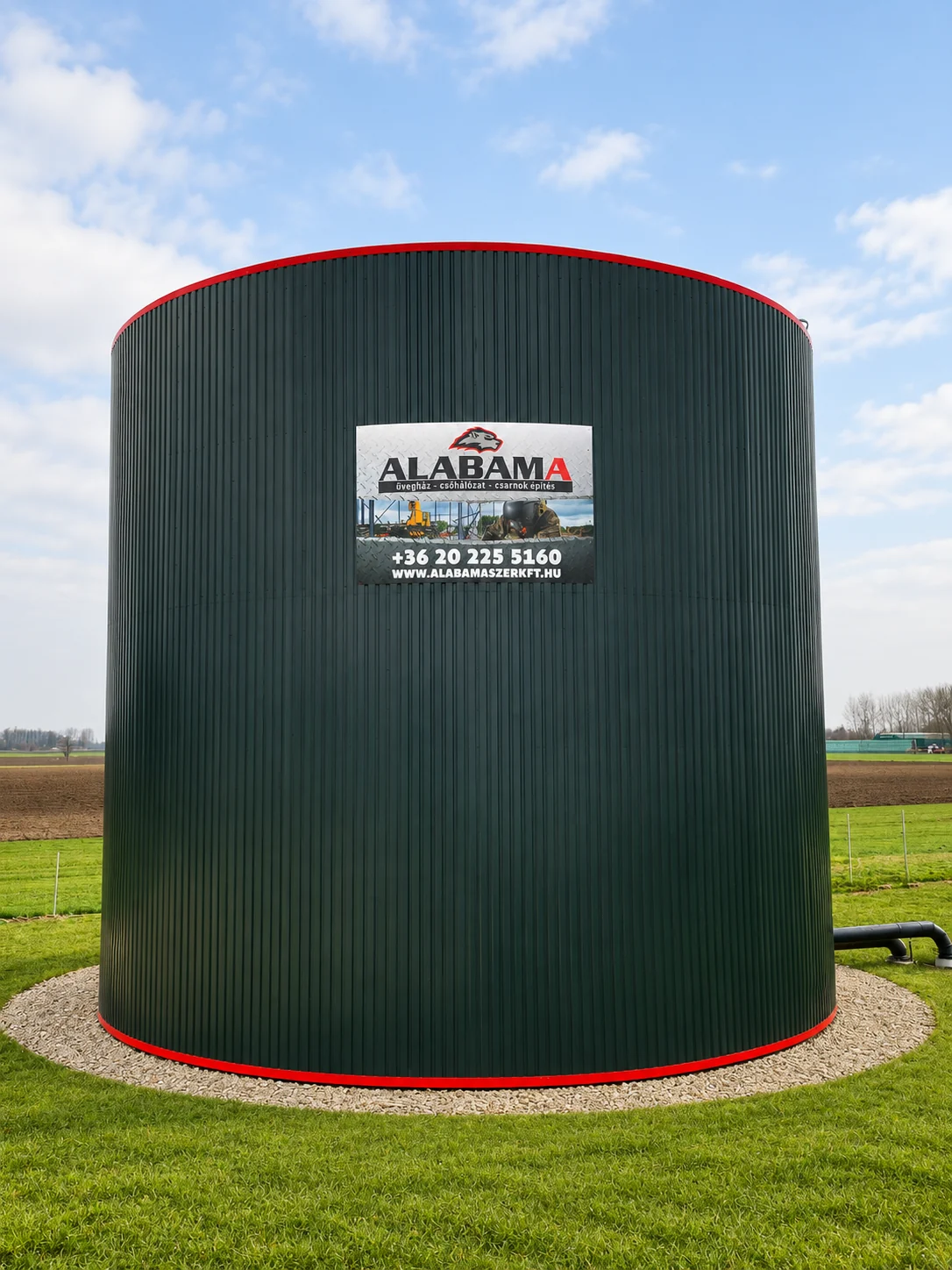
Completed project
Zákány horticultural site – 1000 m³ buffer tank in Csanytelek
We built a complete 1000 m³ buffer tank for heat storage at the horticultural site of Zákány Zoltán in Csanytelek.
- Year completed
- 2023
- Site
- Csanytelek
- Work completed
- Tank construction
In 2023, we built a 1000 m³ buffer tank for the horticultural business of Zákány Zoltán in Csanytelek. Alabama Szer Kft. completed the tank construction, from the steel body assembled on site to the roof, external access ladder, cladding and mechanical connections. The tank was built to store heat for the horticultural heating system. This required an on-site steel structure capable of holding a large volume of water, together with its upper cover, access arrangements and external finish.
Heat storage for the horticultural heating system
Heating is an important part of crop production. Heat demand changes over time, and heat may be produced at a different rate from the rate at which it is needed. A buffer tank stores heat in water for later use. The Csanytelek tank was built for this storage function as part of the site’s heat-supply system.
The tank provides a link between heat production and heating demand. Available heat can be stored in the water and used later for heating. Building the steel tank created the storage space needed for this task. The completed unit combines the water-storage volume, mechanical connection points and structural elements required for its use.
1000 m³ of storage, assembled on site
The tank has a storage volume of 1000 m³. Water acts as the heat-storage medium: it absorbs heat as its temperature rises and can release heat as it cools. Volume is therefore one of the tank’s basic parameters. The amount of heat that can actually be stored and used also depends on the water temperatures and how the system operates.
Creating this storage volume required large, connected steel surfaces. Separate plate elements were assembled on site in Csanytelek to form the cylindrical shell, upper cover and complete tank body. The size of the structure affected material handling, access to assembly points and coordination between the work areas. On-site steel assembly was central to the construction work.
Material handling and assembly at the horticultural site
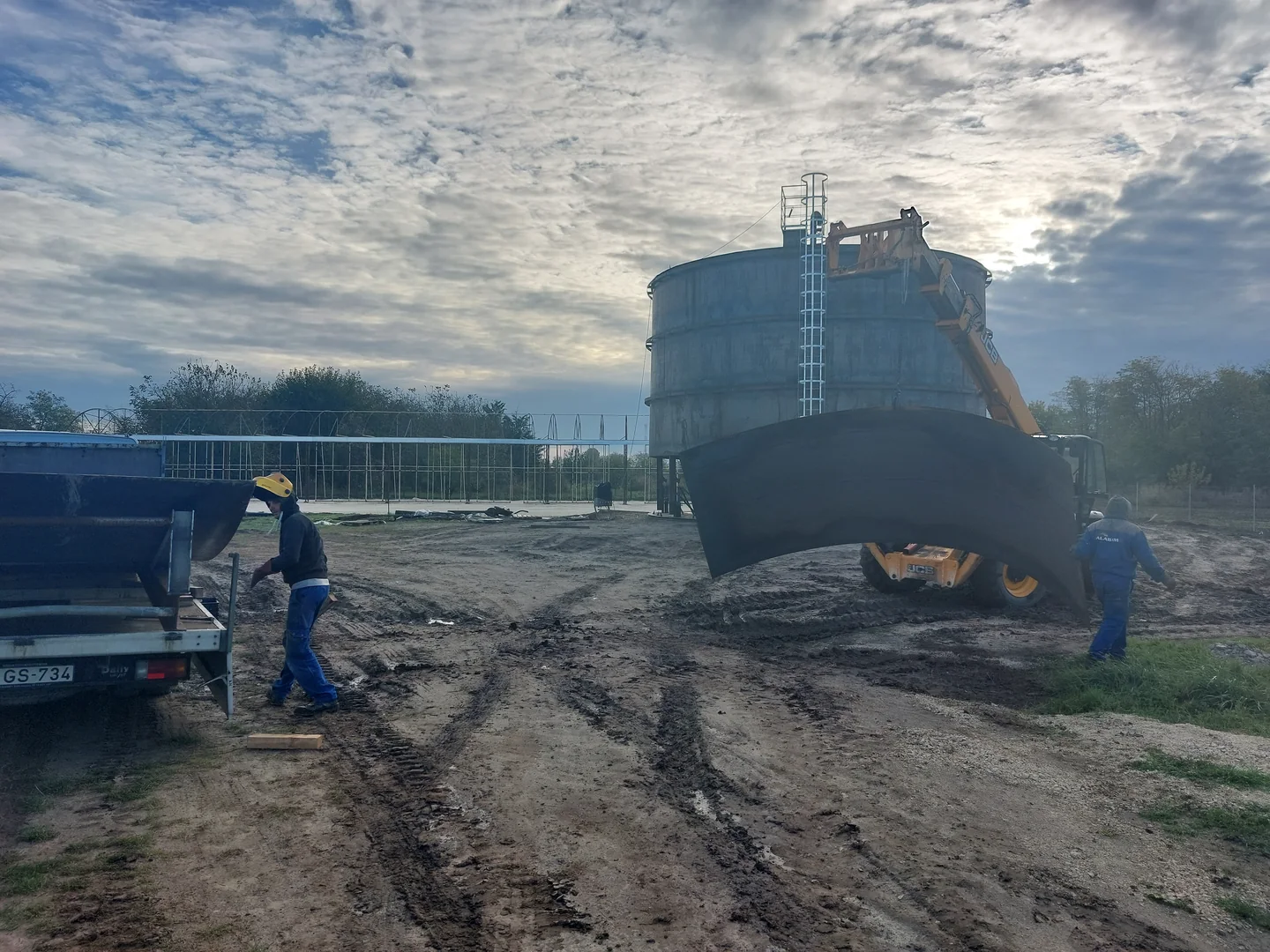
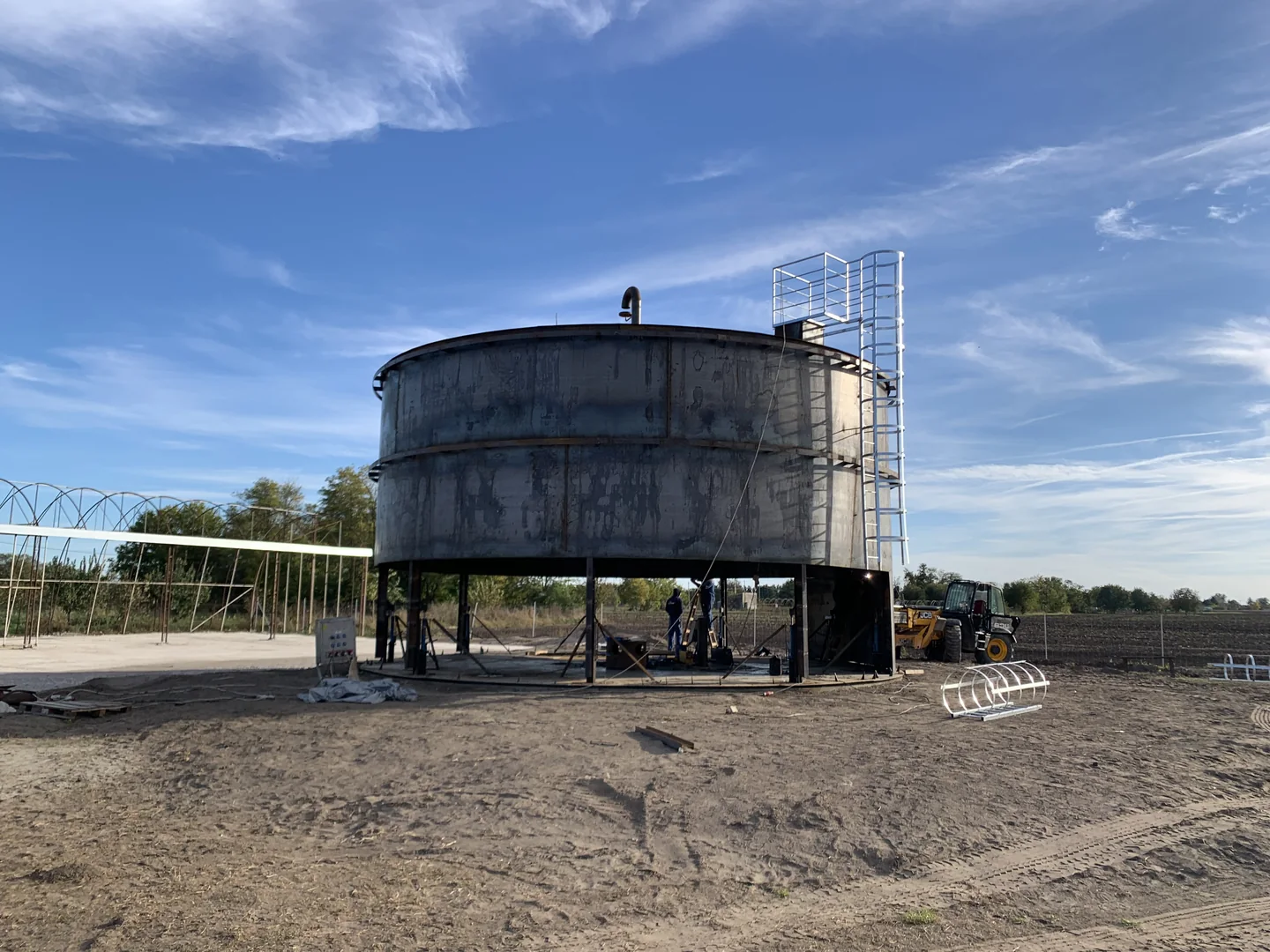
The tank was built within the horticultural site. Curved steel plates had to be moved into position and incorporated into the structure. Handling the larger shell sections and delivering them to the assembly area formed part of the on-site work. Material handling and assembly progressed together as the elements were positioned for each stage.
The plates placed beside the tank gradually became its surrounding wall. Each element had to fit the developing steel body. The work involved handling large sections and aligning the adjoining plate edges. Work also took place on both sides of the structure, requiring access for the team, welding equipment and assembly tools.
Bottom plate and thermal-break insert
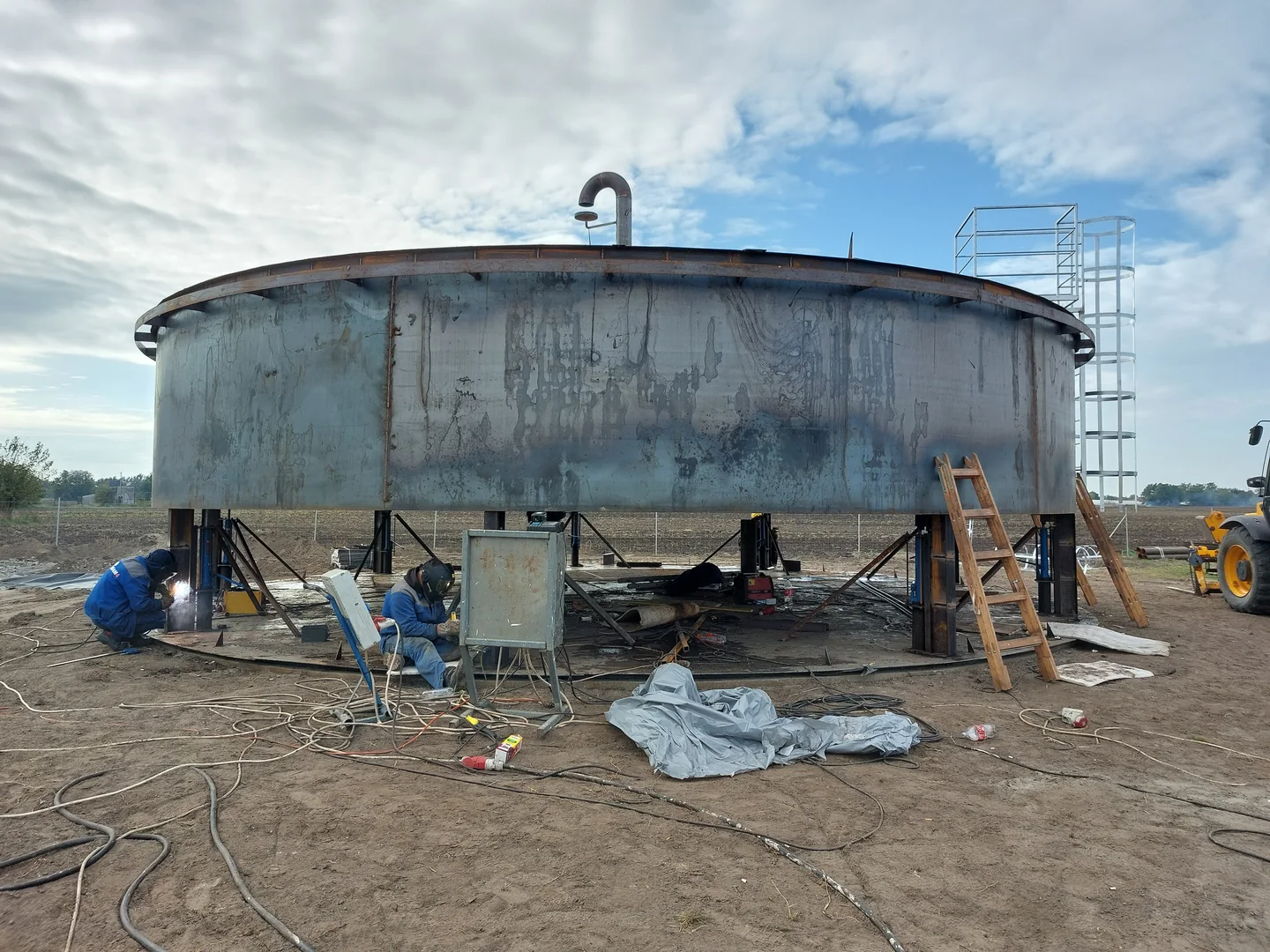
The on-site work included assembling and permanently welding the prefabricated bottom plates. Plates prepared to the cutting patterns were joined to form the tank’s lower steel surface. Their alignment and connections had to fit the complete tank body.
A rubber thermal-break insert was also installed at the base plate. This linked the lower structural detail to the tank’s heat-storage function. The bottom plate forms the lower surface of the steel body, while the insert forms part of the thermal arrangement around the base. This work package was part of the tank construction alongside the shell and upper cover.
Curved plates form the cylindrical shell
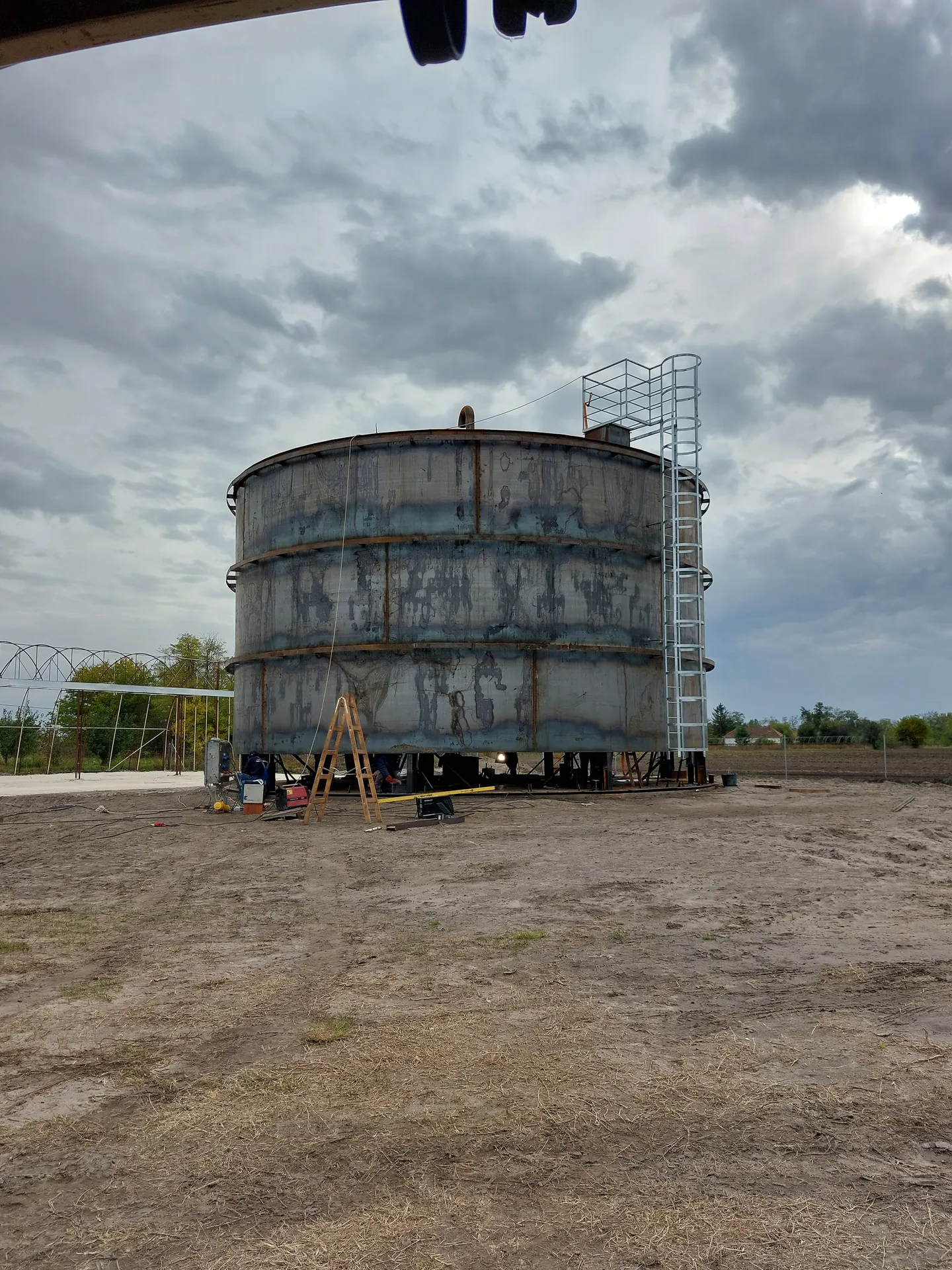
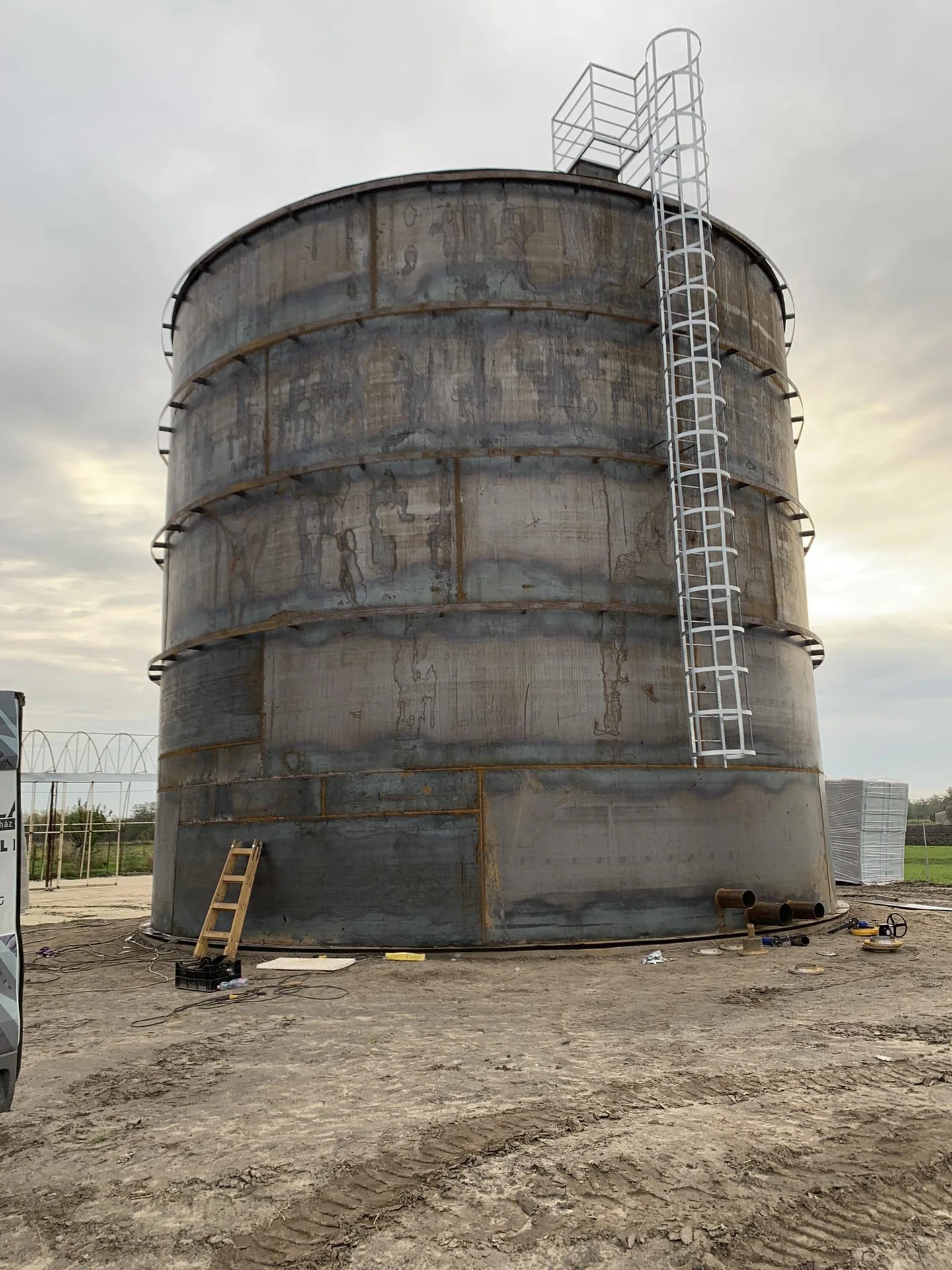
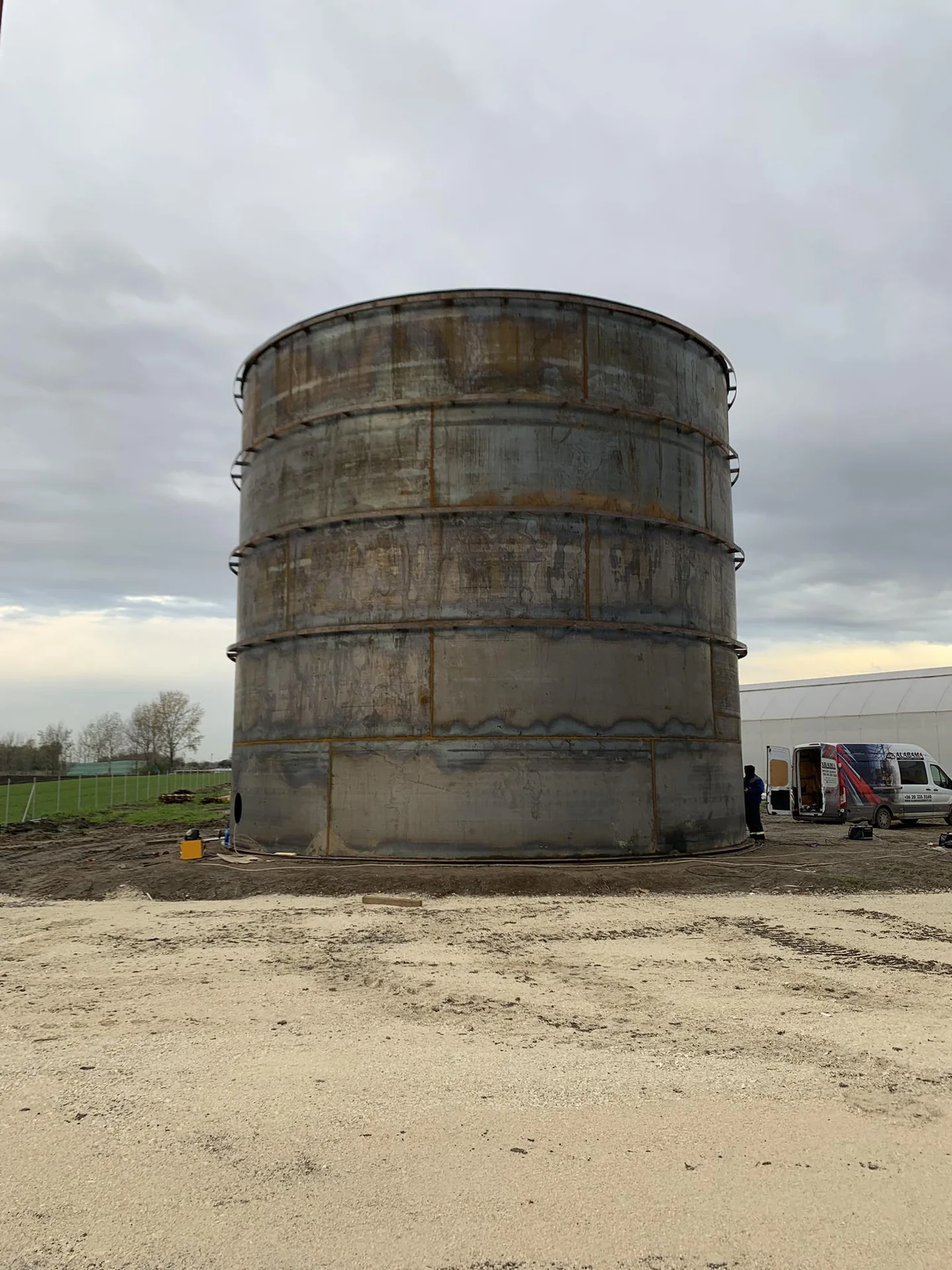
The shell forms the wall around the storage volume. It was assembled from separate curved steel elements, with horizontal and vertical joints. On-site assembly brought these individual pieces together into one continuous cylindrical body. The shell took shape through several intermediate stages.
Plate-edge alignment and the circular shape had to be managed together. Although the shell consists of many plates, it encloses one storage volume in the finished tank. Forming the joints was therefore part of assembling the complete body. The upper tank section, roof and external access ladder were built in coordination with the shell and the rest of the steelwork.
On-site welded joints
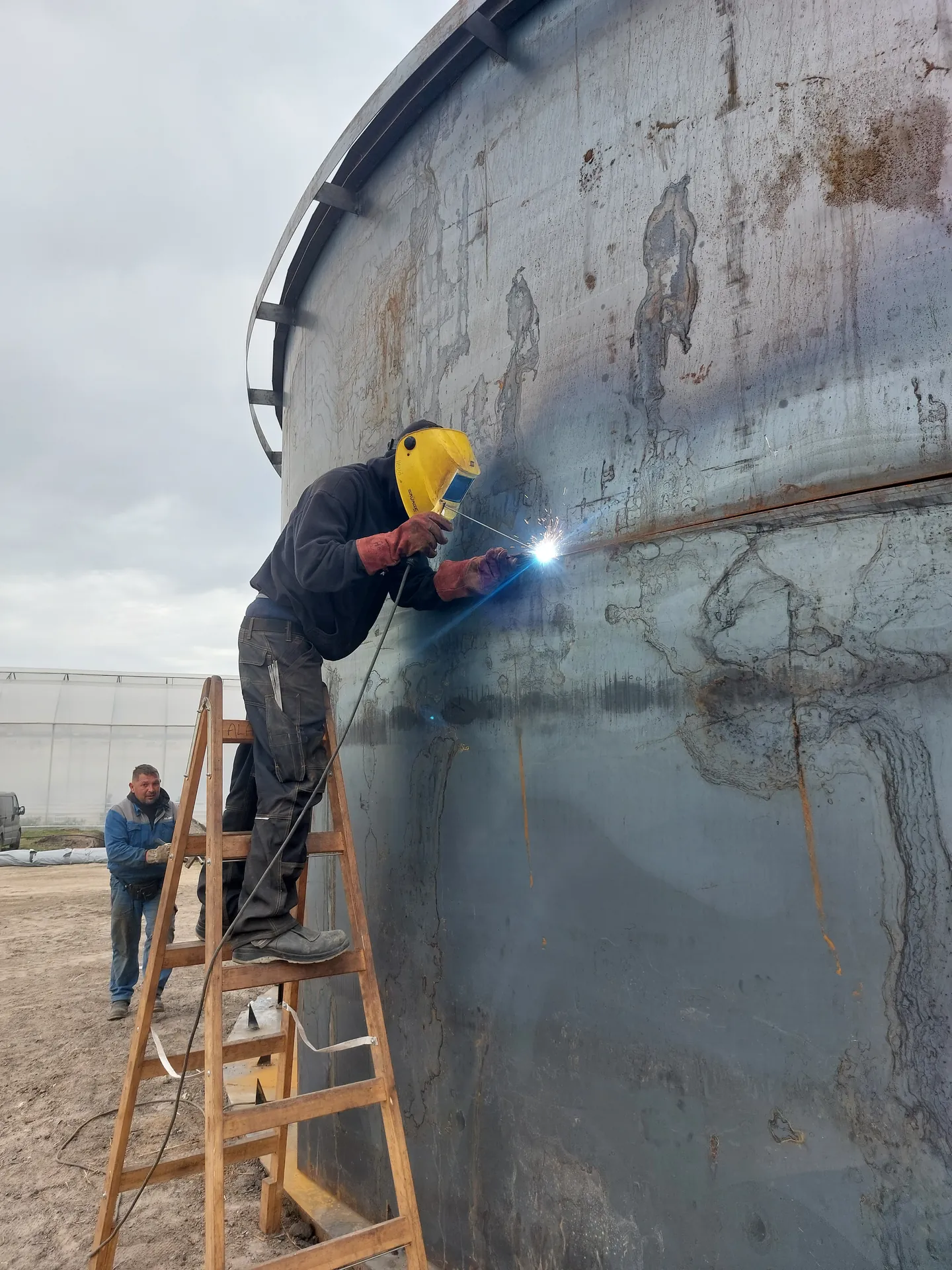
The steel elements were connected by on-site welding. The plate joints joined the assembled sections into a continuous steel body. Work at the horizontal shell joints followed the tank’s circular form. The large structure was built through successive operations at these individual plate connections.
Welding progressed with assembly. Each joint became accessible according to the tank body’s stage of construction. Building the complete shell and preparing its individual plate connections were two parts of the same task. Alabama Szer Kft. carried out this on-site welding and assembly as part of the tank steelwork.
Assembly inside the tank
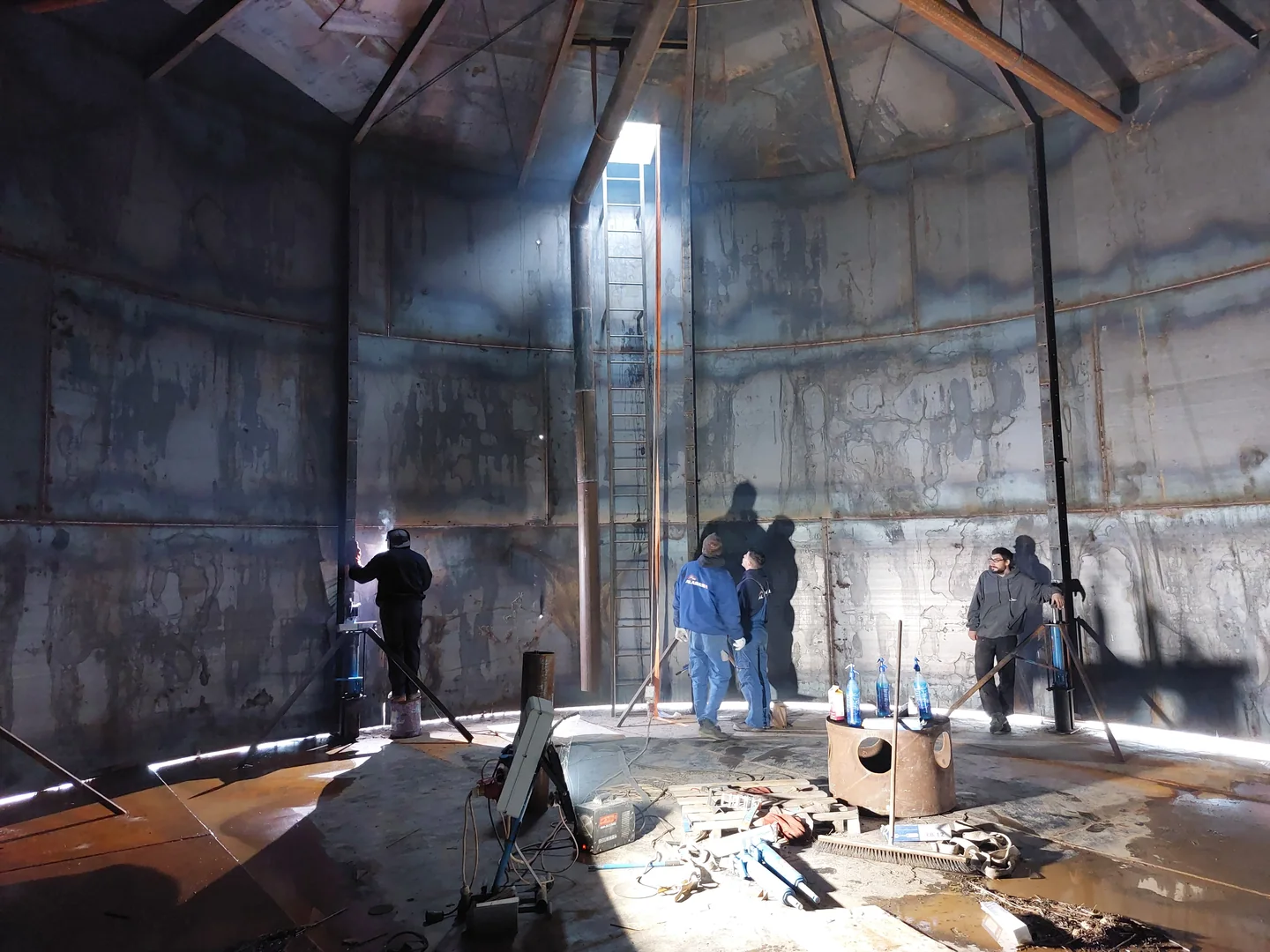
Construction also required work inside the tank. Welding and assembly at the inner shell surface complemented the work outside. The team worked within the developing steel body using the necessary equipment and tools. Before completion, the interior provided access for joining the parts enclosing the water volume and assembling the upper structure.
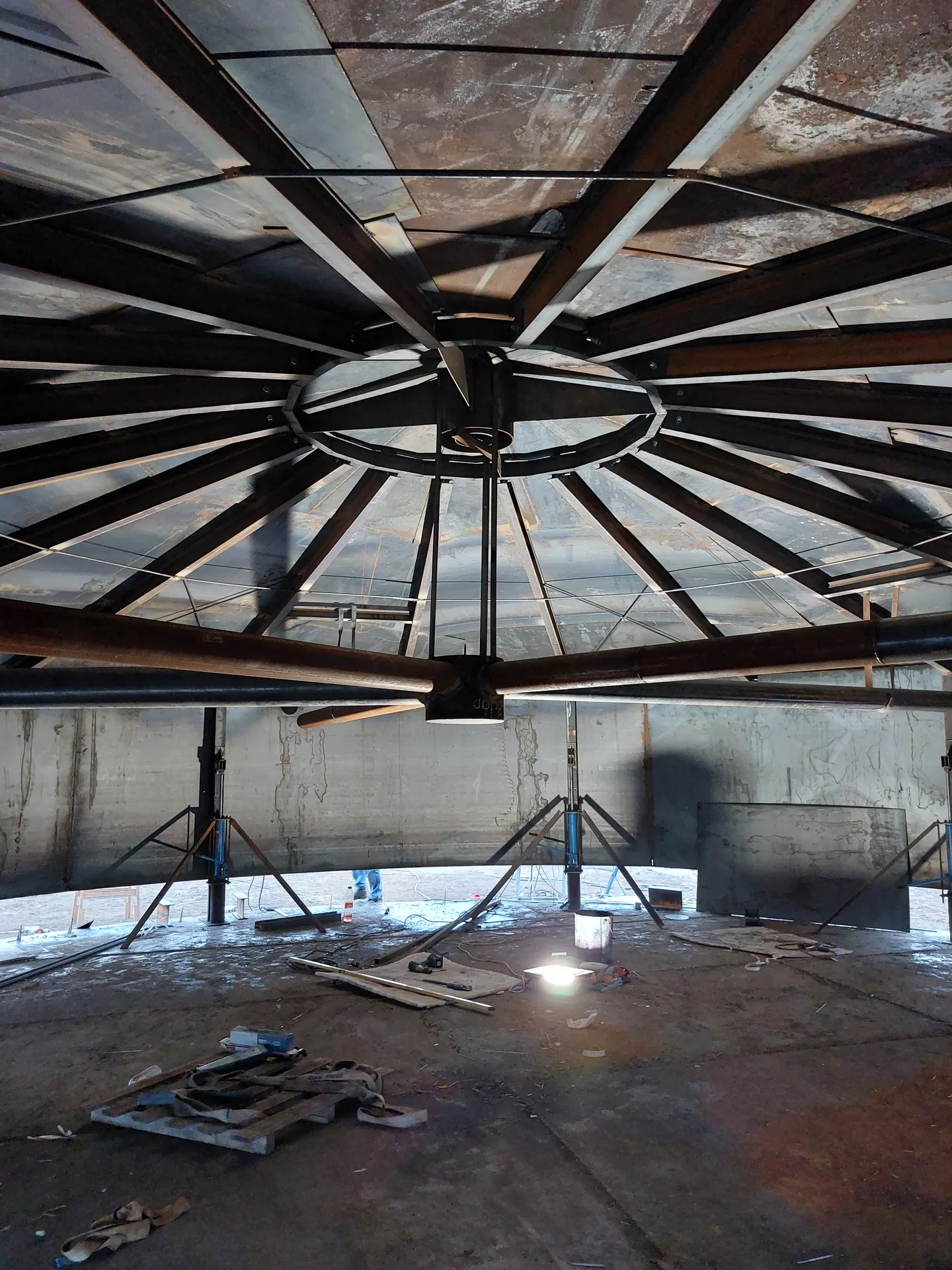
The cylindrical shell and the roof supports meet on the inner side. They form different surfaces of the finished tank but had to fit into one structural unit during assembly. Internal work contributed to completing the steel body. The finished tank therefore reflects work carried out at both external and internal assembly points.
Internal distribution pipe and support brackets
Alongside the external connections, mechanical installation work was carried out inside the tank. The agreed work included welding the brackets for the internal distribution pipe and installing the prefabricated steel pipe. The brackets support the pipe, while the distributor sits within the water-storage space. This connected the tank’s steel assembly with its internal mechanical arrangement.
The distribution pipe and its supports had to be installed inside the tank. They serve a different purpose from the surrounding shell: the shell forms the storage body, while the distributor forms part of the water-side arrangement. The Csanytelek work therefore included internal installed components as well as the large external steel surfaces.
Roof structure and upper platework
The upper part of the tank required a support structure and plate cover. The roof supports carry the upper surface, and the plates form the cover. Roof construction was coordinated with the shell assembly, with the upper steelwork connecting to the developing tank body during the intermediate stages.
Separate plates also had to form a continuous upper cover. Assembling the supports and plate sections was part of the on-site steelwork. The roof closes the top of the water-storage body and connects to the tank area reached by the external ladder. Together, the shell, roof supports and upper plates formed the tank’s complete steel structure.

External access to the upper tank
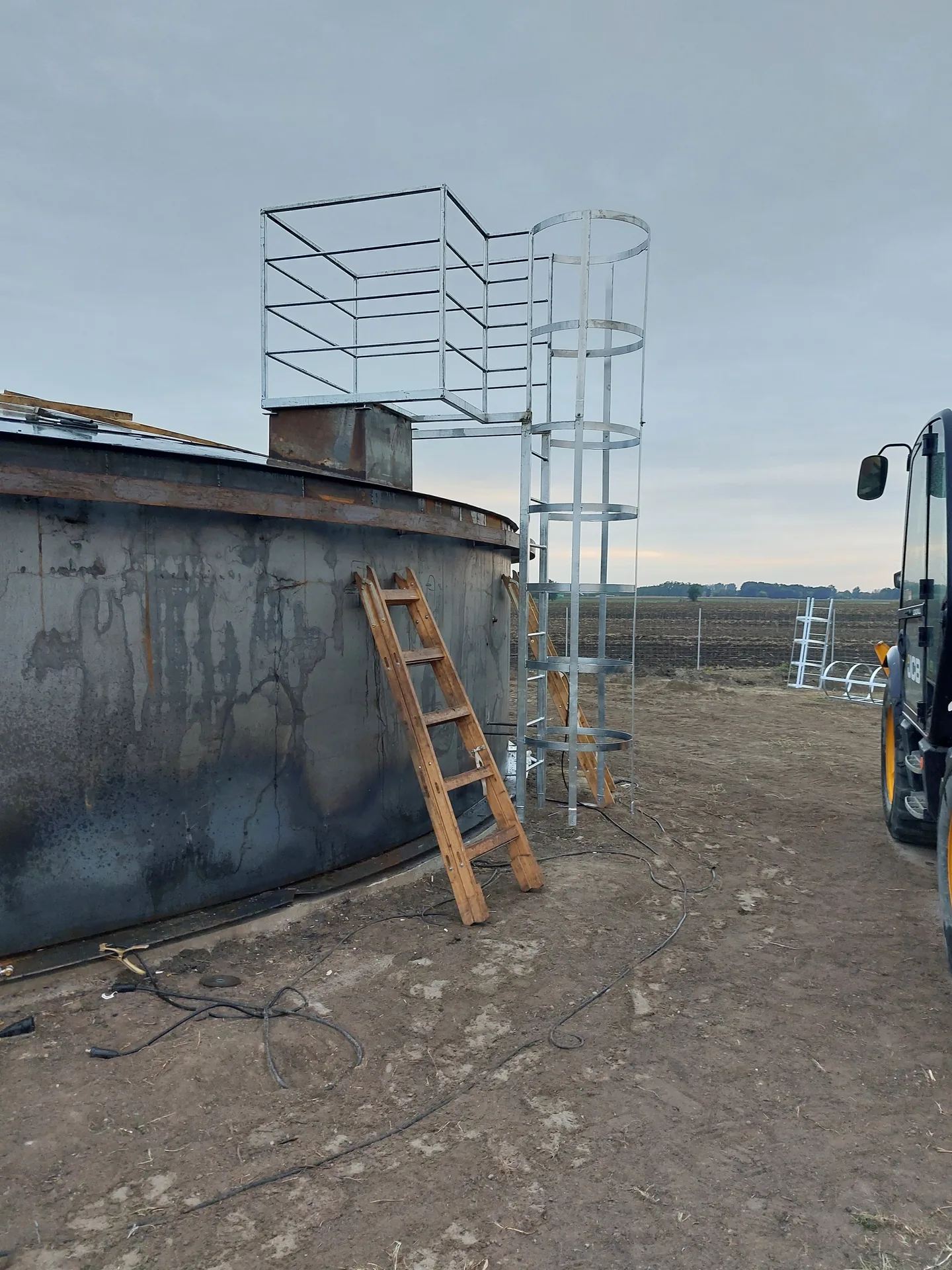
An external ladder was installed to reach the top of the tank. It includes a protective cage and a guarded upper access area. These elements provide access to the equipment and formed part of the installation work associated with the steel body. Access to the upper parts was a separate structural task within the tank construction.
Different parts of the tank require different access arrangements. The external ladder leads to the upper area, while the lower mechanical connections are near ground level. The ladder runs alongside the shell and connects to the upper access area. Its construction linked the steel assembly work with the tank’s later use.
The assembled steel body
The complete shell, roof and external access structure formed the tank’s steel body. At this stage, the earlier platework and assembly operations had come together. Elements previously handled separately were now parts of one storage body, with the upper cover and access structure connected to it.
Before the external finish was completed, the steel surface remained directly accessible. The individual shell plates and joints were visible at this stage. The following work packages completed the exterior. Constructing the steel body and forming the finished outer cladding were distinct but related parts of the overall work.
External cladding
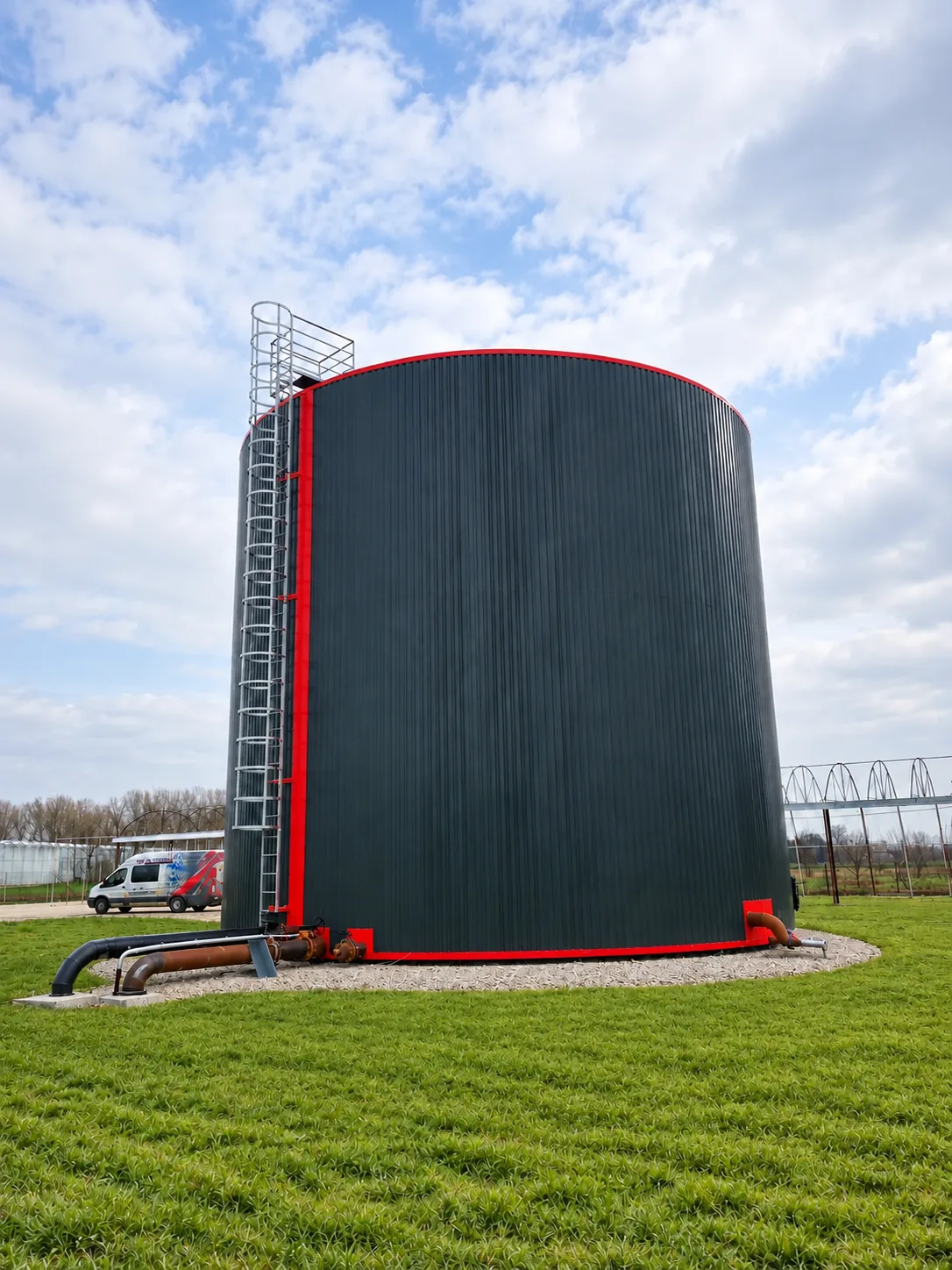
Sheet-metal cladding forms the outer surface of the completed tank. Its vertical sections enclose the steel body. The cladding elements had to fit the cylindrical surface, roof edge and adjoining structural details. This on-site work completed the tank’s external finish.
The external ladder and mechanical connections sit alongside the finished cladding. Their interfaces had to be considered together so that each part could fulfil its role. Installing the large cladding surfaces and finishing around the connections were parts of completing the same tank.
Connection to the site’s mechanical systems
The connecting pipework makes the buffer tank part of the horticultural heat-supply system. Pipes and fittings connect at the lower part of the tank, linking the stored water volume with the surrounding mechanical system. These connections formed part of the complete tank-construction work.
The storage body and mechanical connections serve the same heat-storage purpose. For the water volume to function within the system, the tank needs the appropriate connection points. The Csanytelek unit was completed with its clad body, external access ladder and pipe connections.
The completed 1000 m³ heat store
The Csanytelek project resulted in a 1000 m³ buffer tank for heat storage at the horticultural site of Zákány Zoltán. Alabama Szer Kft. completed the agreed tank construction in 2023. The work brought together on-site handling and assembly of steel elements, shell welding, the roof structure, external access and the finished exterior.
The tank was built for horticultural use: its water volume stores heat, and the connecting mechanical system provides the link to the heating network. The individual steelwork and platework packages came together as one storage unit. The Csanytelek reference presents the result of this on-site tank-construction project.
Project photographs